Cementing & Fracturing Equipment
Acid Pump Truck
The acidizing spread on this truck is built around a centrifugal charge pump that moves 1000 m3/h at 45 m of head, controlled either at the panel or from a 30 m wired remote.
Explore 58 equipment models across drilling rigs, workover rigs, cementing and fracturing equipment, well service units, transport systems and supporting oilfield machinery.
The acidizing spread on this truck is built around a centrifugal charge pump that moves 1000 m3/h at 45 m of head, controlled either at the panel or from a 30 m wired remote.
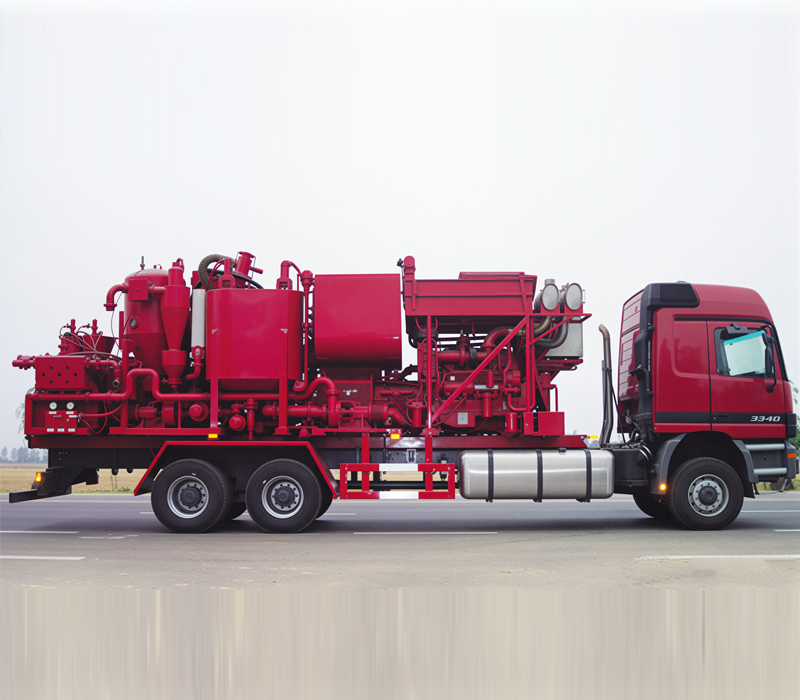
This truck carries two triplex plunger pumps - 3ZB-265 or 3ZB-300 units - on a Beiben ND2254F50J 6x6 chassis, each rated to put 70 MPa and a combined 100 m3/h into the casing string.
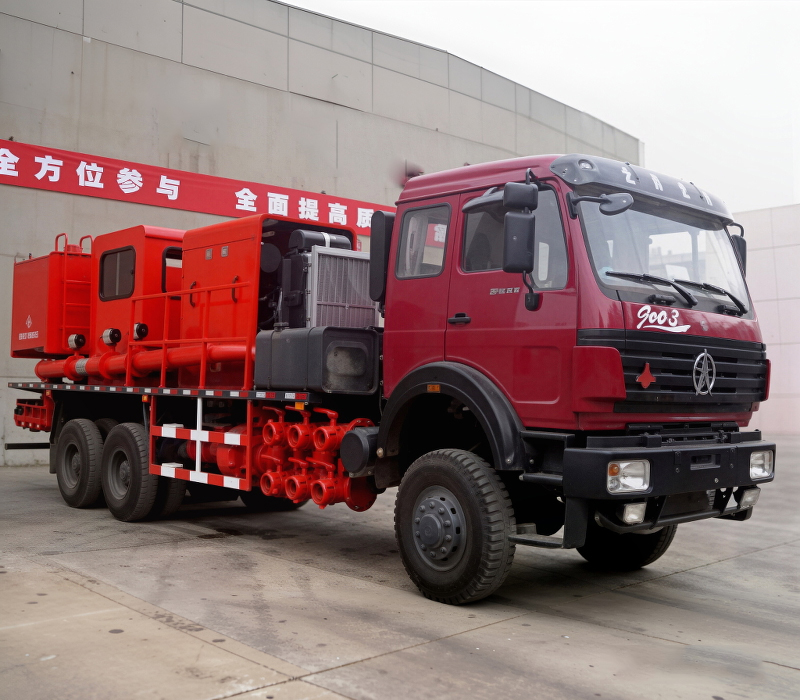
The support role on a cementing or fracturing spread is filled by this truck's centrifugal pump - 750 m3/h at 45 m of head - feeding clean water or fracturing fluid to where the active equipment is working.
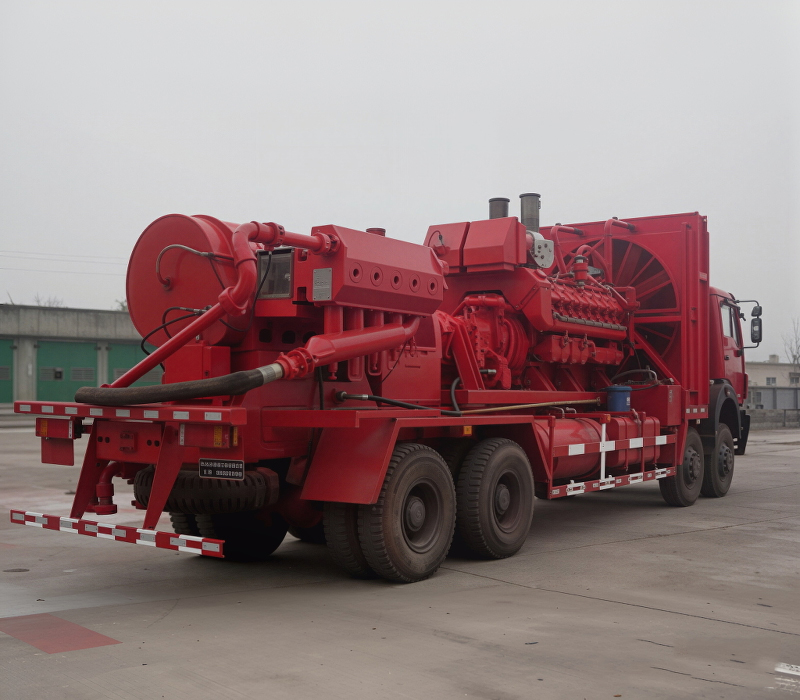
A fracturing truck earns its place on location by two numbers: 105MPa maximum pressure and 2719 L/min maximum displacement.
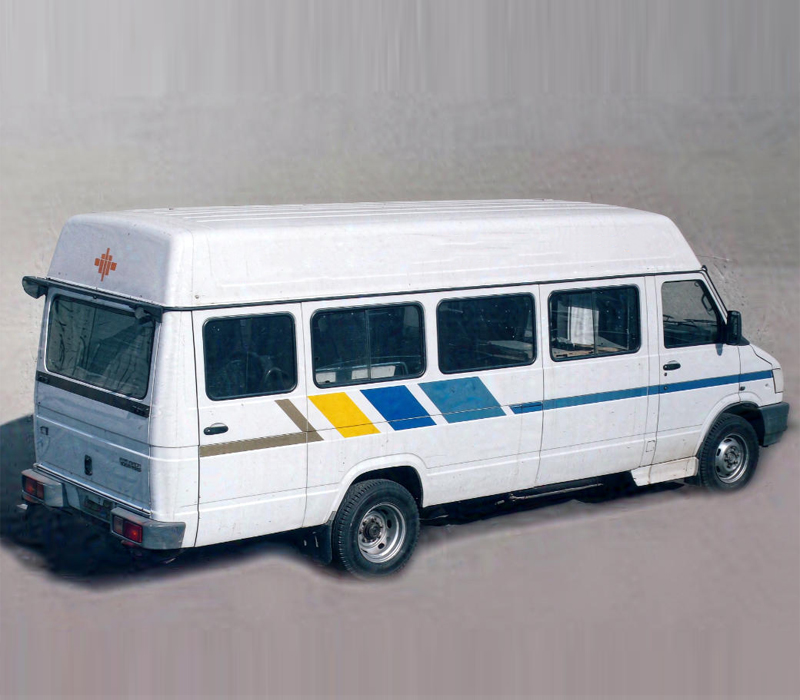
This is the control cabin of a cementing or fracturing spread, not a pump: a Siemens PLC center console with analog input-output modules sits inside a 4x2 or 4x4 chassis, networked through a looped-plus-star control architecture and backed by 8-12 Motorola radios over a 50 m working radius.
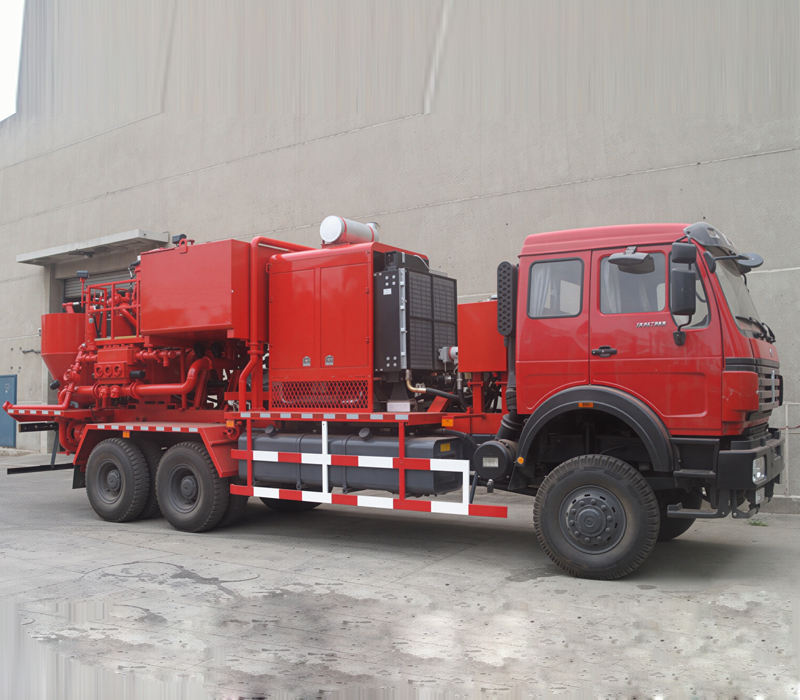
One 3ZB-265 or 3ZB-300 triplex pump, mounted on a Beiben ND2254F50J 6x6 chassis, delivers 70 MPa maximum working pressure and 100 m3/h theoretical displacement for the cementing job that does not need a twin-pump spread.
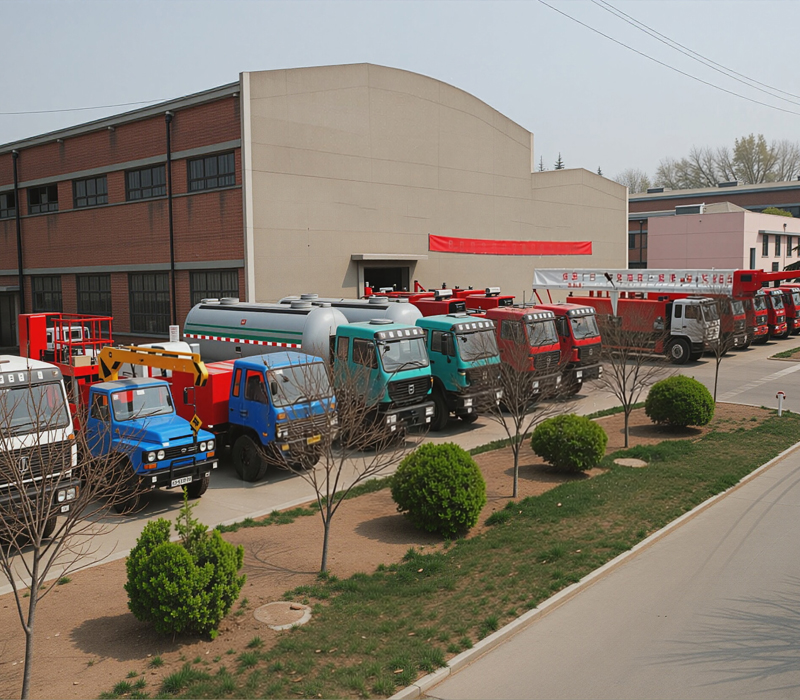
Installed on a fixed skid rather than a truck, this unit pushes 70 MPa and 84.6 m3/h through a triplex plunger pump rated at 300 kW input power, pumping water, slurry and other well-service fluid for a station that stays in one place.
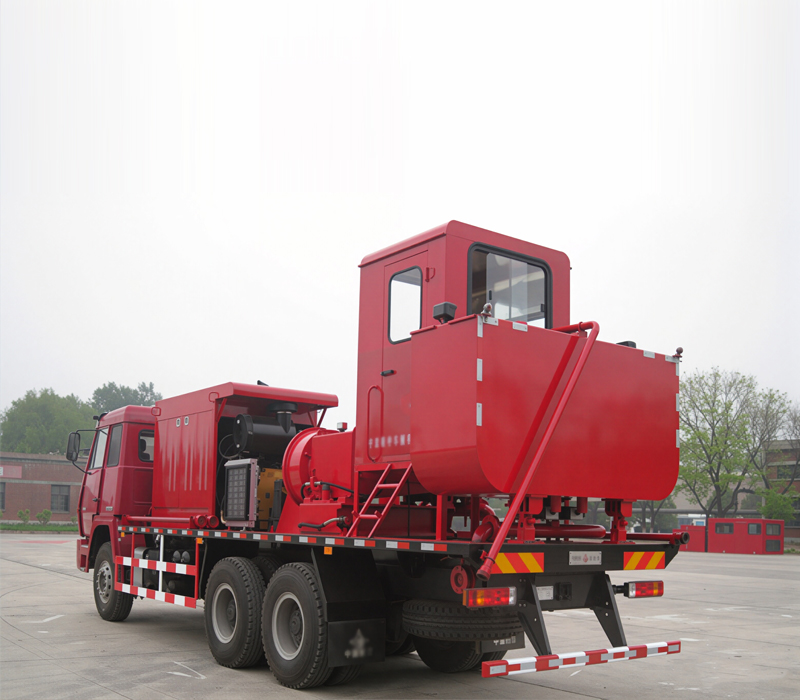
The truck-mounted cementing range is specified by two pressure classes and two drive options.
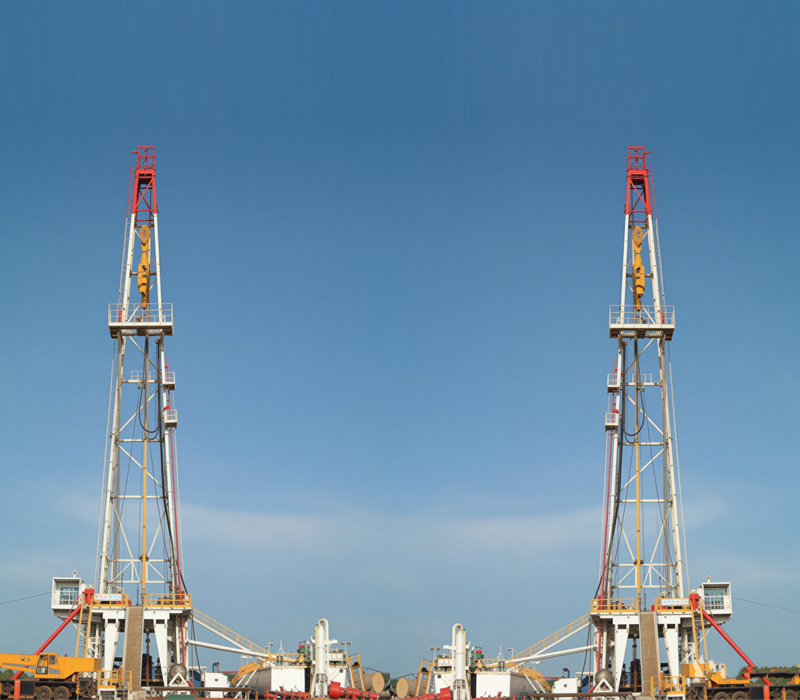
The ZJ40D is the 4000m-class workhorse of the skid range, rated 2500–4000m on 114mm drill pipe (2000–3200m on 127mm pipe) with a 2250kN maximum hook load reeved 5×6 over φ32mm line.
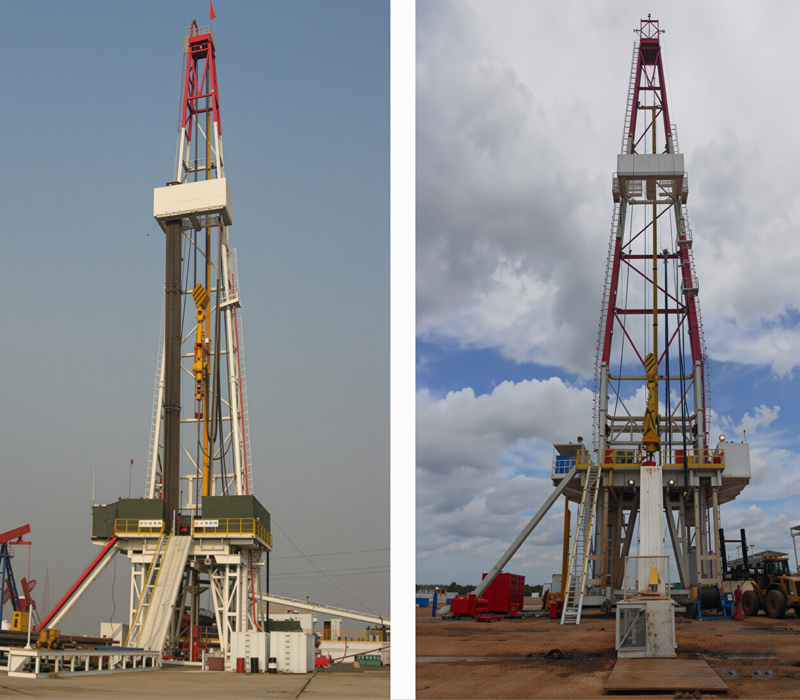
The ZJ50D takes the skid line into the 5000m class, rated 3500–5000m on 114mm pipe (2800–4500m on 127mm) with a 3150kN maximum hook load.
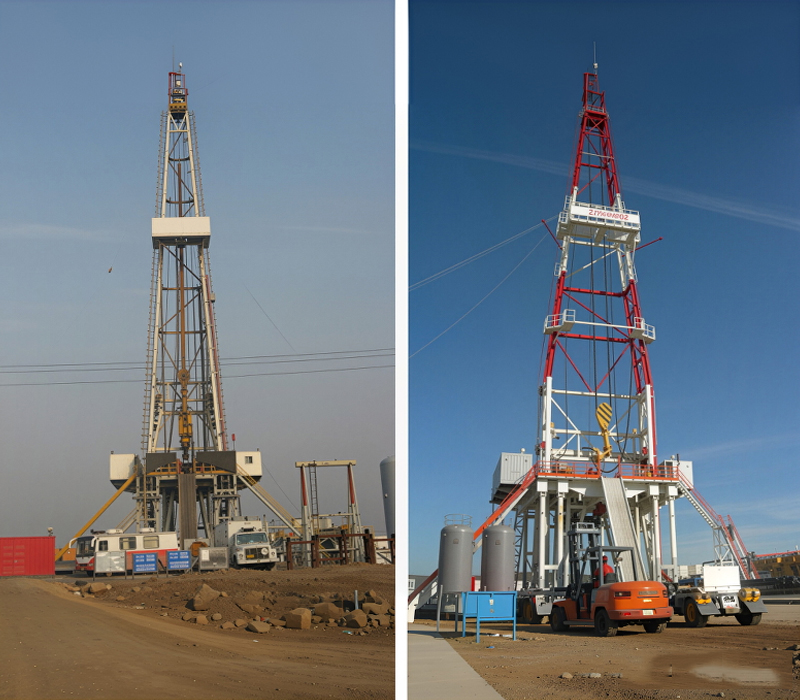
The ZJ70DB is the standard ultra-deep rig of the skid line, rated 4500–7000m on 114mm pipe (4000–6000m on 127mm) with a 4500kN maximum hook load on a 6×7 string reeved with φ38mm line.
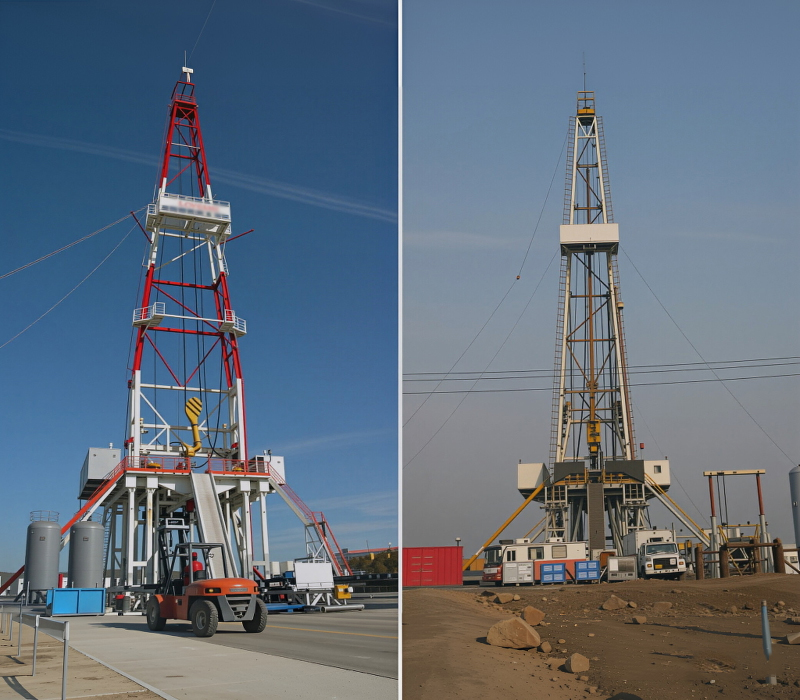
The ZJ80 is a fixed-station rig sized by its depth envelope: 6000–9000m nominal drilling with 114mm drill pipe, or 5000–8000m with 127mm pipe, on a 6750kN hook rating strung 7×8 with Φ42mm drill line under a 48m K-type mast.
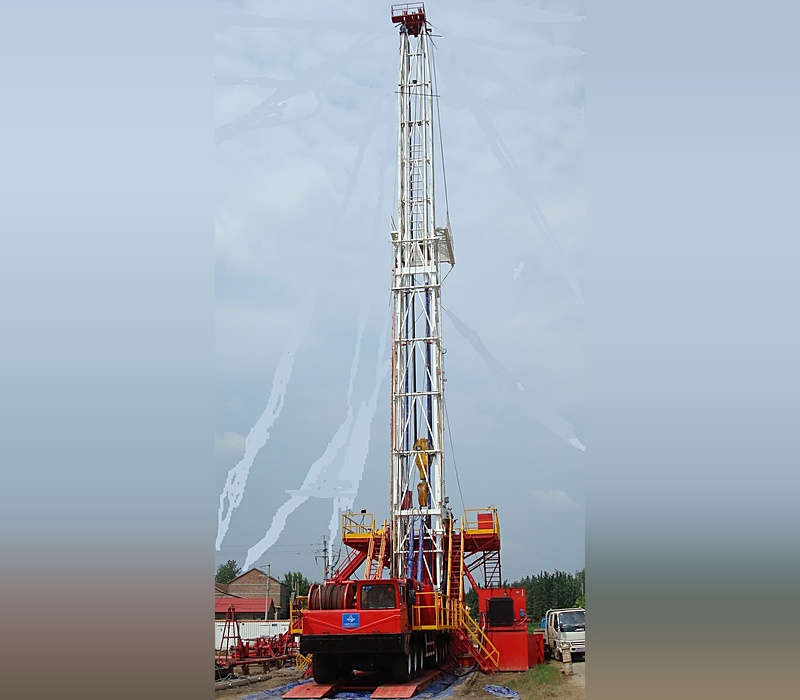
The 3000m Mobile Rig is the lightest fast-mover in the drilling fleet, rated for 3000m on 4 1/2” drill pipe with an 1800kN maximum hook load.
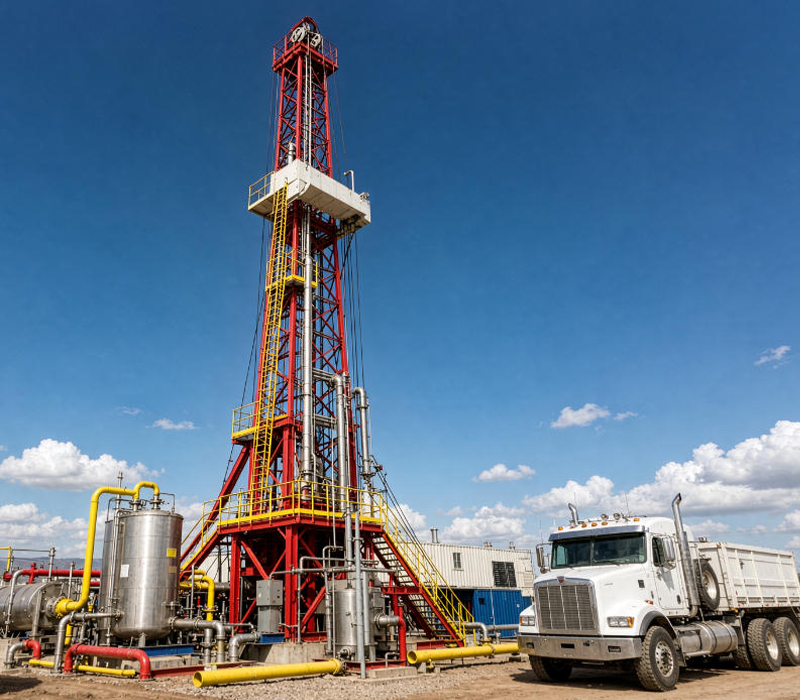
The 4000m Mobile Rig (ZJ5550TZJ225) is the deeper fast-mover of the fleet, rated for 4000m on 4 1/2” drill pipe with a 2250kN maximum hook load.
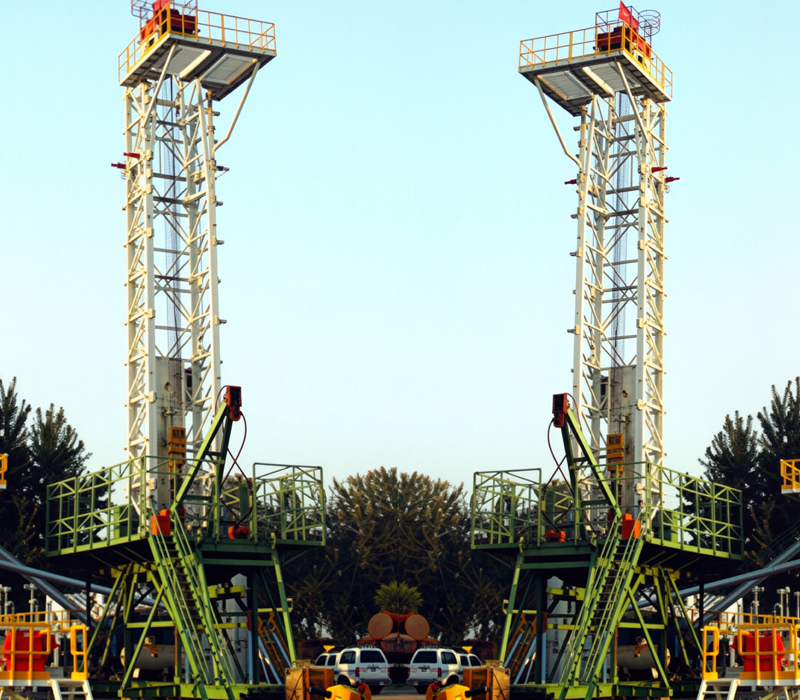
The XJ750/ZJ30 is the smallest fixed-station rig in the skid line, sized around a 1700kN hook on a 5×6 string reeved with φ29mm line, rated for 1600–3000m of hole on 114mm drill pipe.
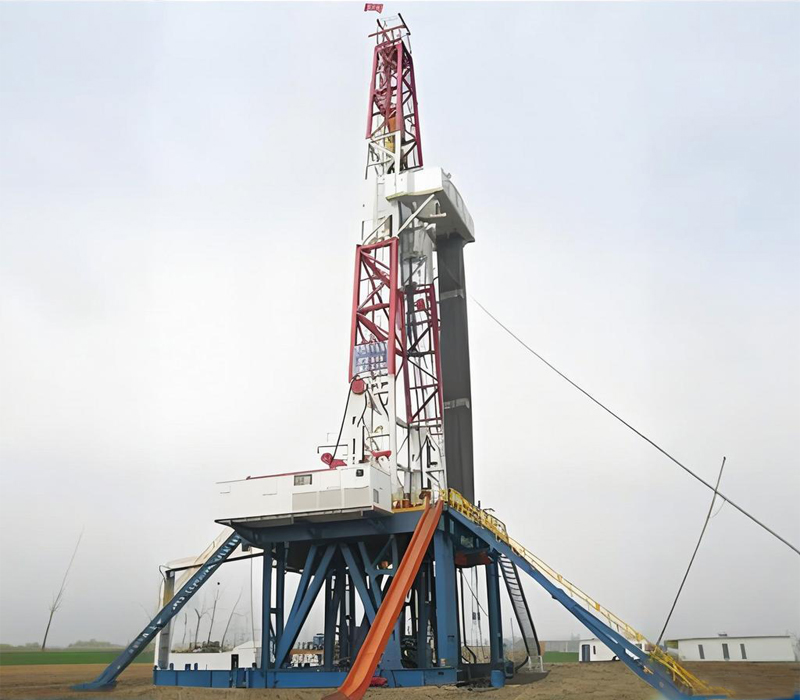
The ZJ70-4500D is a DC-electric drilling rig built for the 7000m class, rated 4500–7000m on 114mm pipe (4000–6000m on 127mm) around a 4500kN hook on a 6×7 string reeved with φ38mm line.
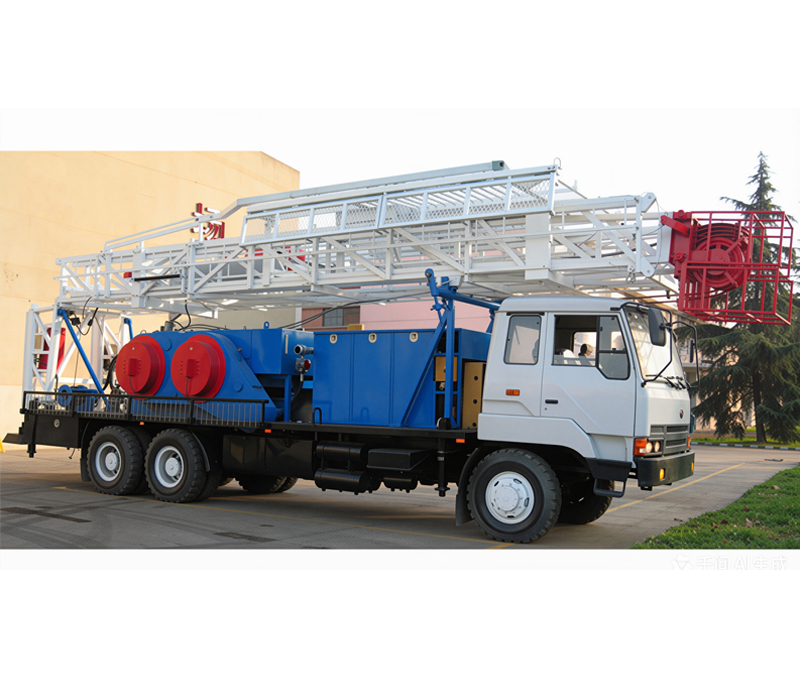
Workover to 3200 m on 2 7/8-inch upset tubing is this rig's job: a 400 kN nominal hook load that peaks at 675 kN, run through six lines of 22 mm wire under a mast that stands 21 m or 23.5 m.
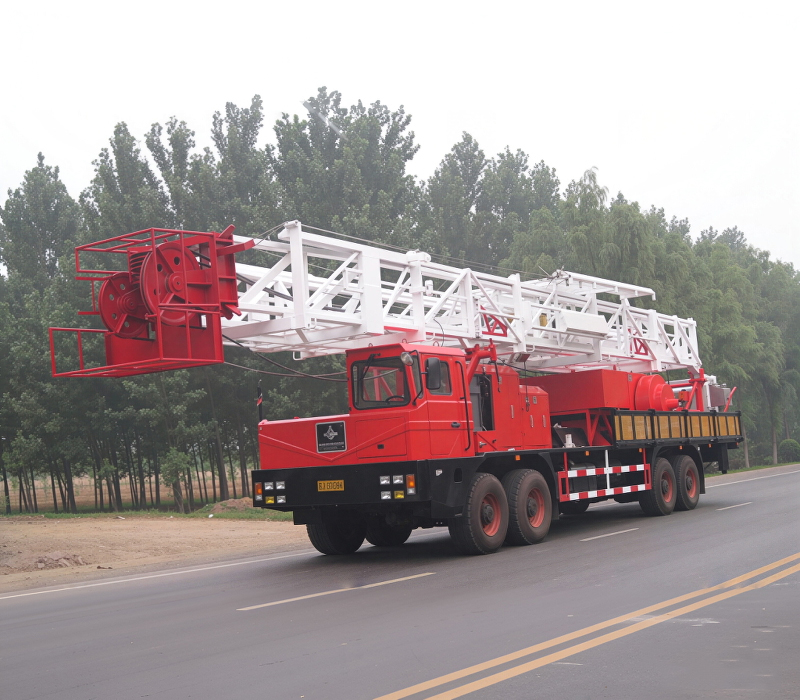
Badged ZYT5502TZJ, this rig is defined by a 1125 kN maximum load on a 4x5 traveling system, eight lines of 26 mm (1-inch) wire pulled to a 210 kN fast-line pull, under a 32 m clearance mast.
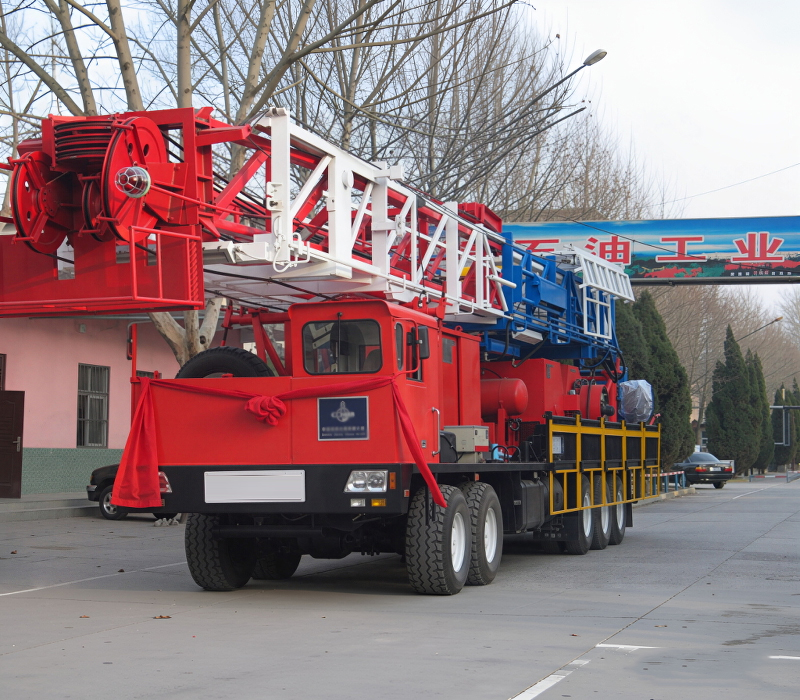
At 5500 m of workover with 73 mm tubing, and 4500 m when drilling with 73 mm drill pipe, the XJ450 sits where shallow service rigs run out of reach and the deep fleet starts.
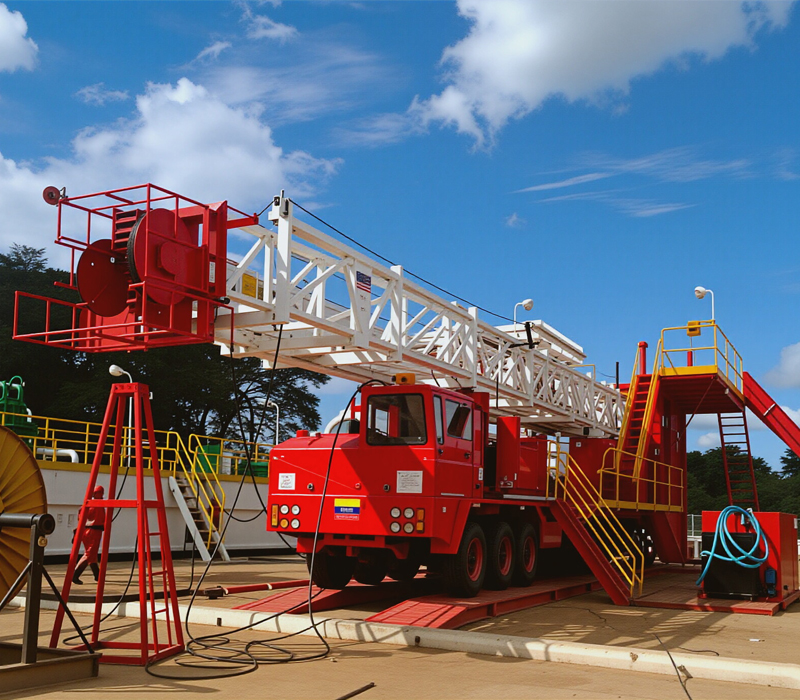
Built for wells the shallow and mid rigs cannot reach, this 550 hp unit carries its rated 550 hp power pack on a multi-axle heavy off-road carrier and is rated for typical workover to 5800 m and service to 7000 m.
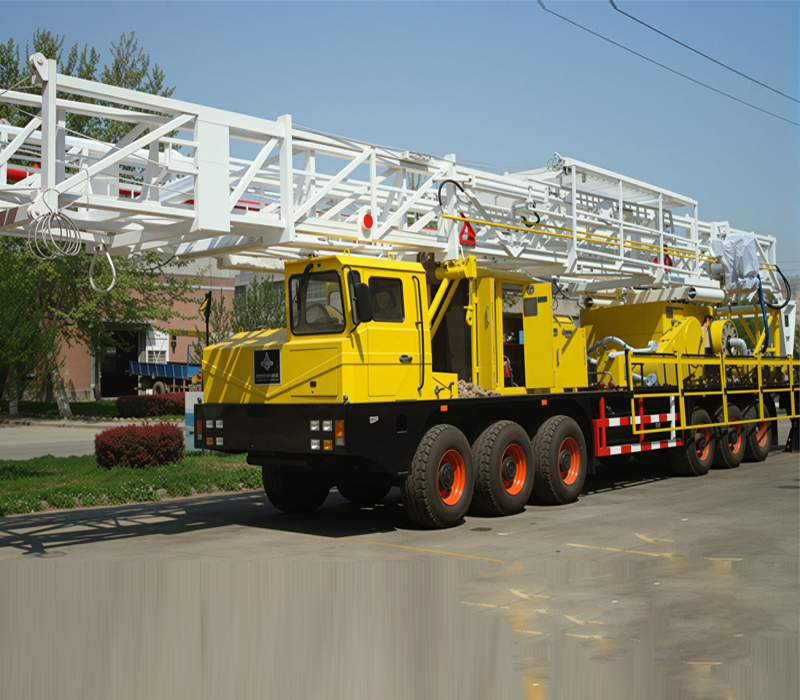
Rated to 1470 kN maximum hook load, the 650 hp truck rig is the machine a service fleet steps up to when 1125 kN-class units start giving away margin on heavy overhaul.
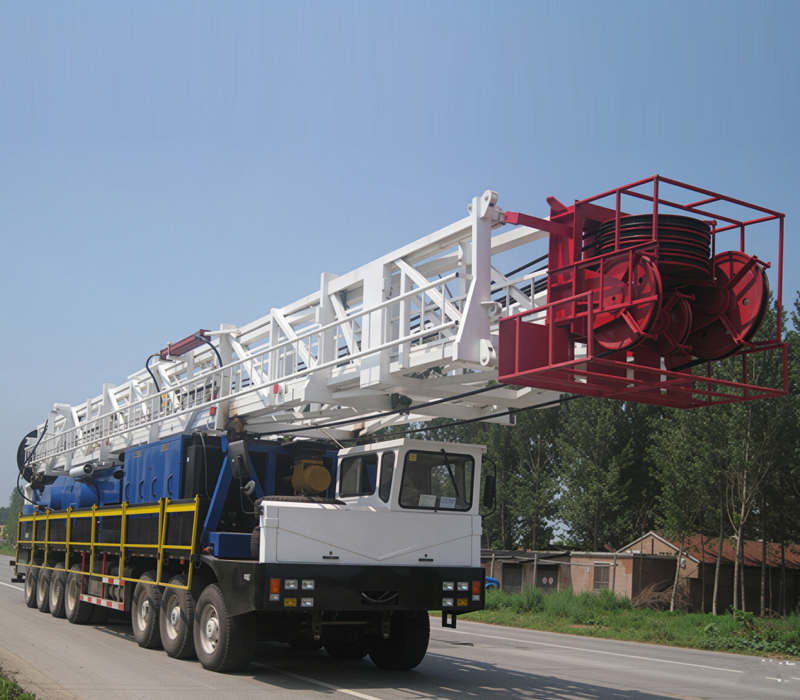
The XJ750 is where the truck-mounted line goes to dual power: two CAT C15 engines, each rated 540 bhp, paired with two Allison M5620AR transmissions to supply the hoisting work behind an 1800 kN maximum load.
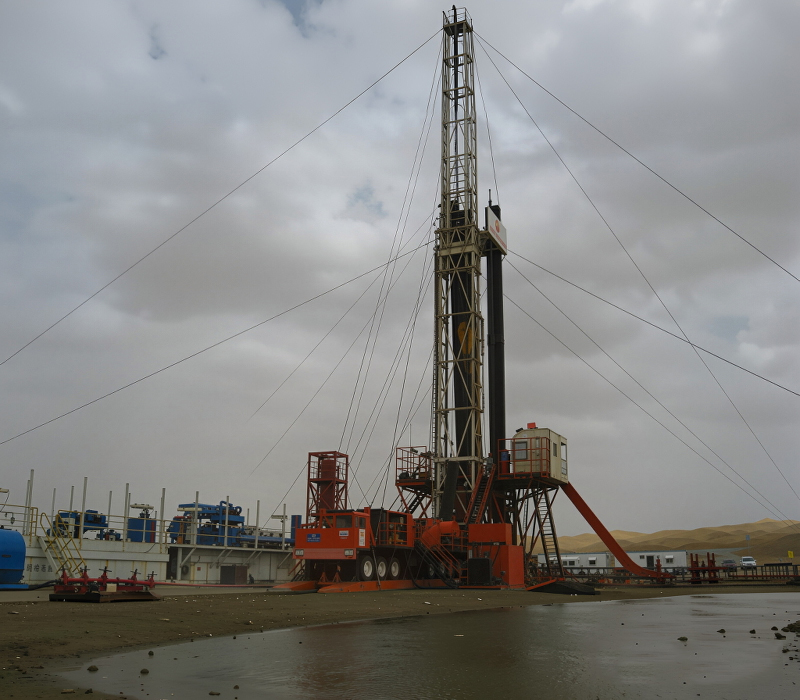
The XJ850/ZJ40 is the top of the truck-mounted range, sized to a 2250 kN maximum hook load on two CAT C18 engines rated 630 bhp apiece.
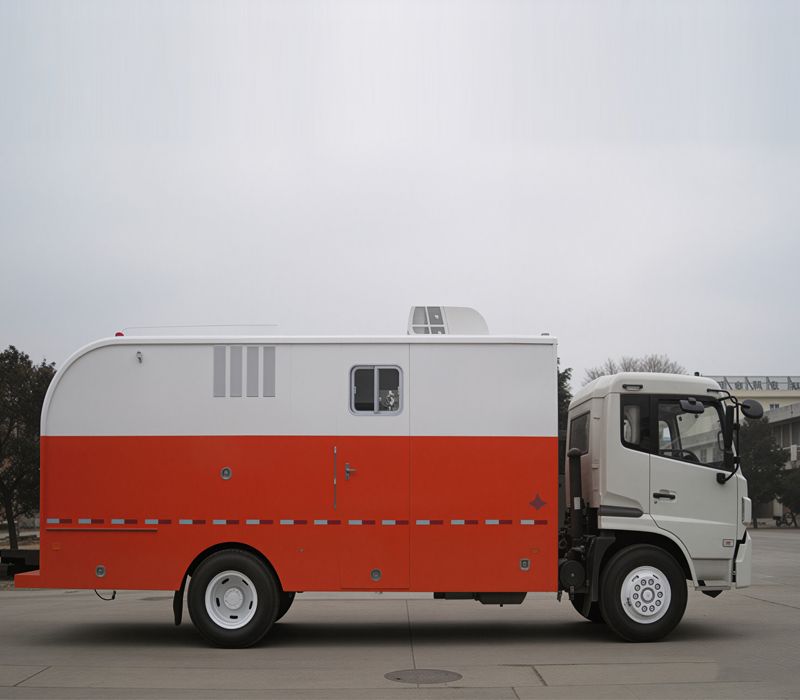
The logging truck is a measurement platform first: model ZYT5142TCJ on a DFL1160BX5 chassis, rated to log to 5000 m on phi5.6 or phi8 mm armored cable, with a winch pull of 30 or 50 kN for the two cable sizes and a hoisting window from 130 to 8000 m/h.
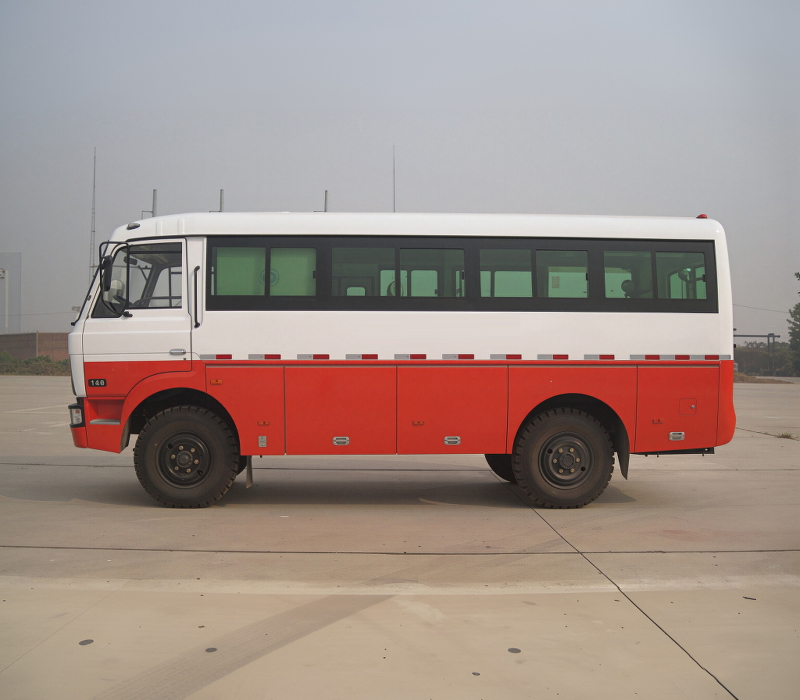
The wireline unit is the mechanical counterpart to the logging truck: on an EQ6672CT 4x4 chassis it runs solid wireline to at least 6000 m on phi2.4 mm line (drum 6500 m or more) or electric cable to at least 4500 m on phi3.5 mm (drum 5000 m or more), with a modest 10 kN maximum pull at up to 6 m/s and a drum speed of 0 to 350 r/min.
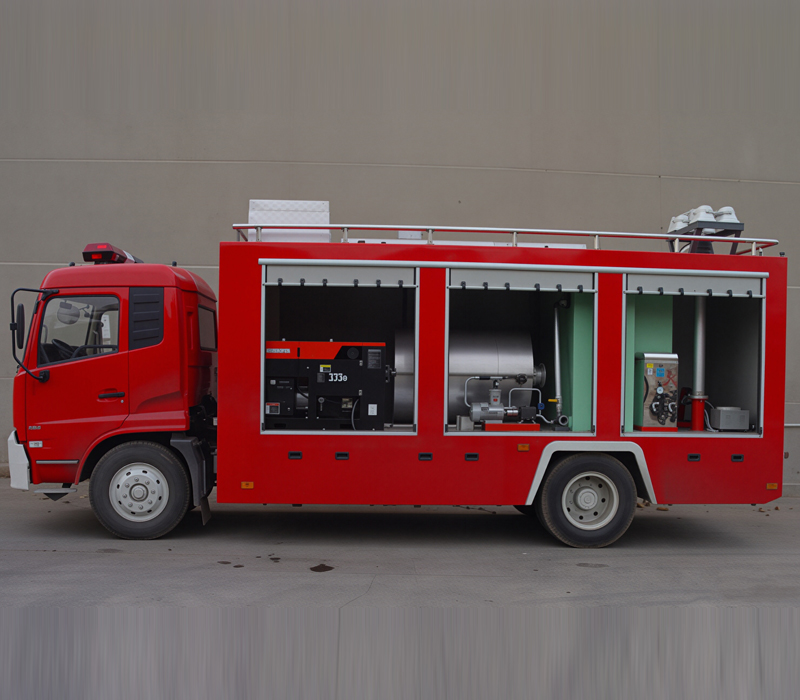
A boiler truck earns its keep by heat, not by pressure: this unit delivers working water at up to 280 through a fired tube package rated at 6 or 9.8 MPa, at a hot-water or steam output of 1.26, 1.8 or 3.0 t/h.
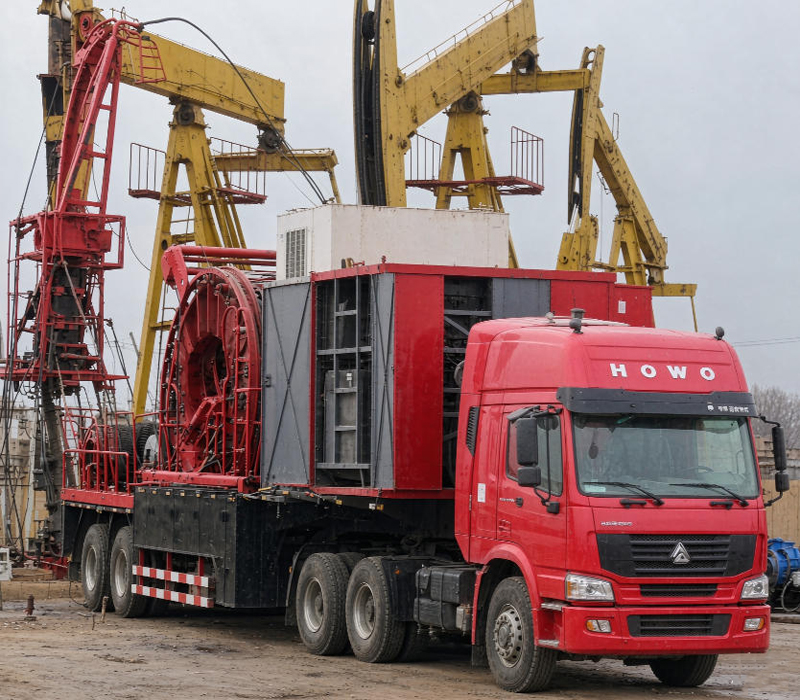
Three pulling ratings define this coiled tubing line: ZLG155/38 holds 155 kN continuous tension, ZLG225/45 holds 225 kN and ZLG290/50 holds 290 kN, with laying depths of 3600, 4200 and 5900 m on 1.5-inch tubing.
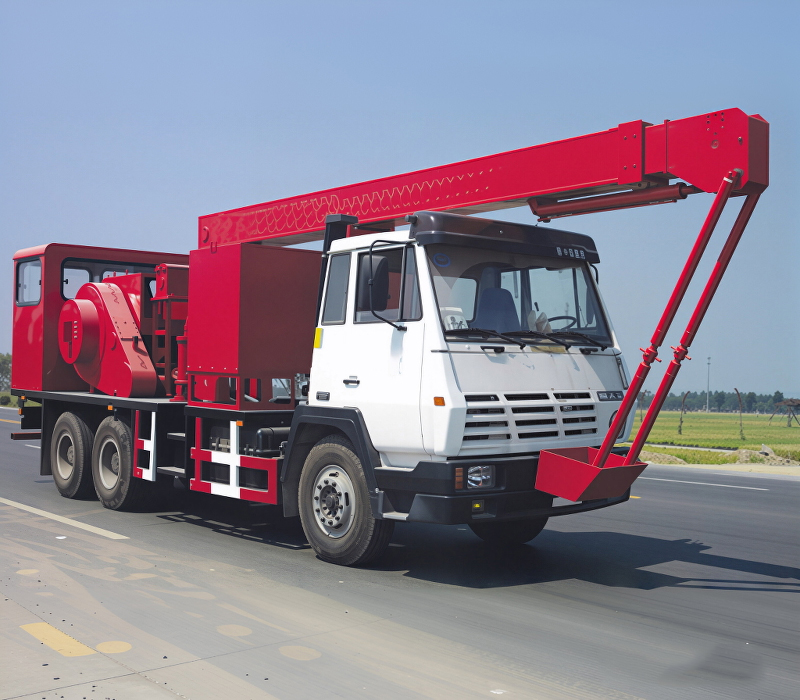
The swabbing unit is rated by a drum-dependent lifting envelope: up to 120 kN at minimum drum diameter, down to 80 kN as the drum fills, with a maximum working depth of 3350 m.
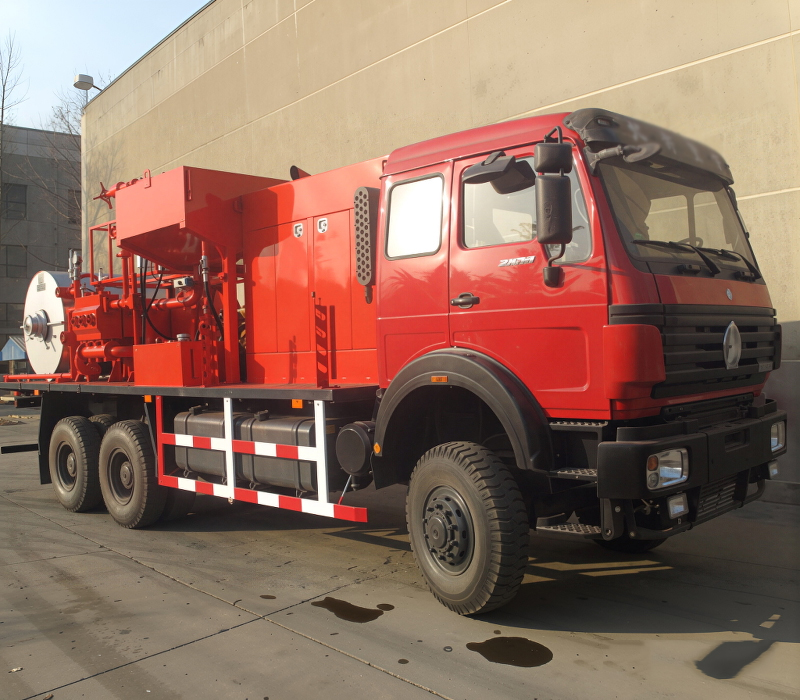
This unit combines two duties in one truck: a triplex plunger pump rated up to 35, 40 or 70 MPa at 50, 60, 80 or 100 m3/h for cold high-pressure flushing, and a fired heater that delivers hot wash at 20 MPa and 160, at no less than 22.5 m3/h and still 4.9 m3/h at peak temperature.
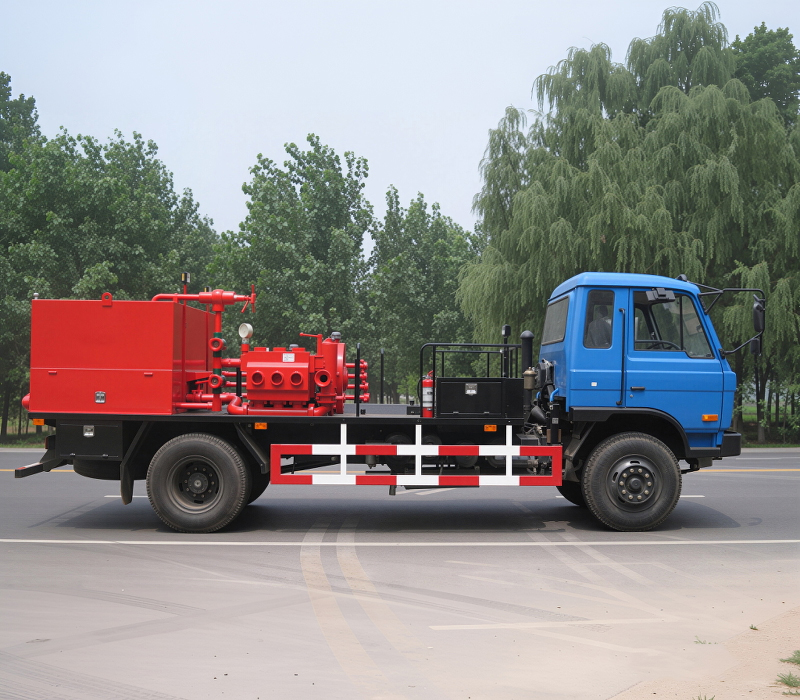
This is the single-purpose water flushing truck, sized at 40 MPa maximum pressure and 30 m3/h maximum displacement, with a booster pump fed at 12 to 16 MPa inlet pressure.
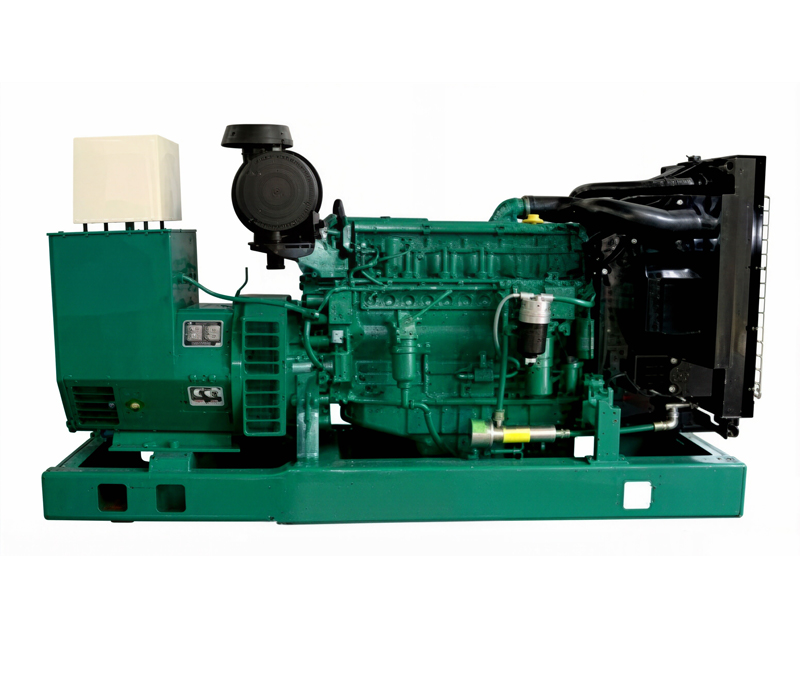
Volvo diesel engines matched to Stamford alternators span this line from the SVL70 at 56 kWe prime to the SVL625 at 500 kWe prime, all at 50 Hz, with brake-specific fuel consumption held around 198 to 208 g/kWh across the range.
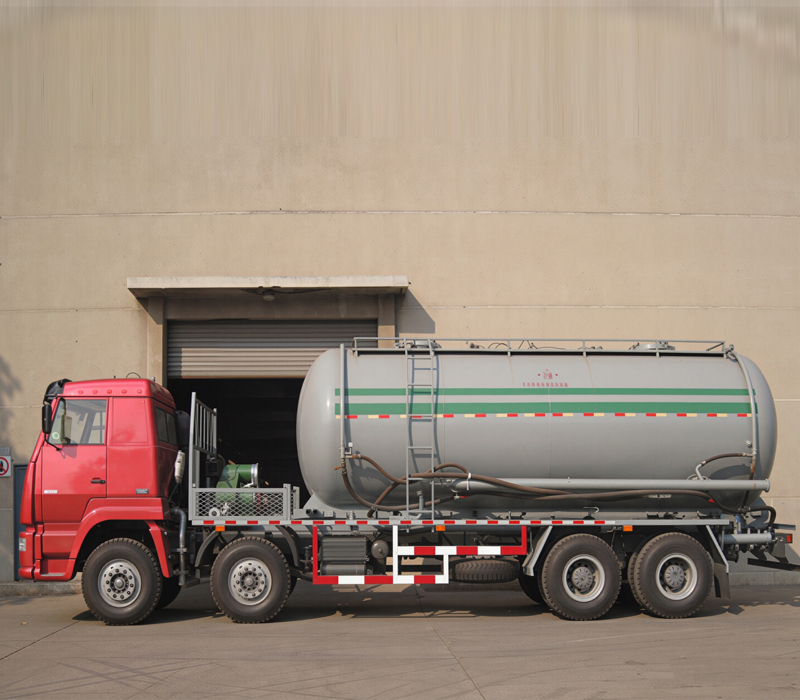
A sealed 14.1 to 20 cubic metre powder tank on a heavy off-road chassis is the working heart of this unit, with a 7.5 to 10 cubic metre per minute compressor holding the chamber at a 0.2 MPa working pressure throughout discharge.
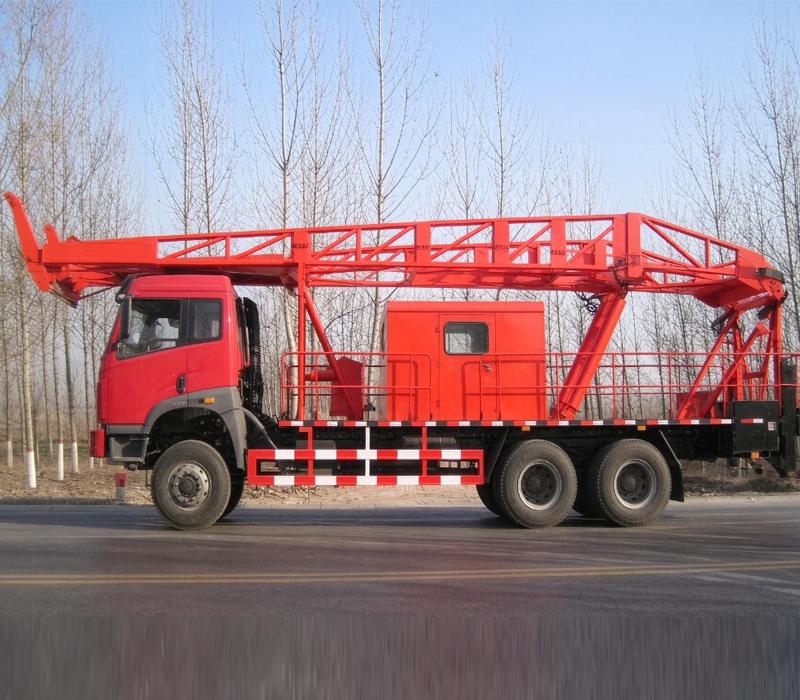
This carrier is built around a 13 MPa lifting-and-landing hydraulic loop, backed by a 6 MPa fine-adjustment circuit and a 0.8 MPa air system, so a folded drilling derrick can be lifted off, set down and aligned without a separate crane.
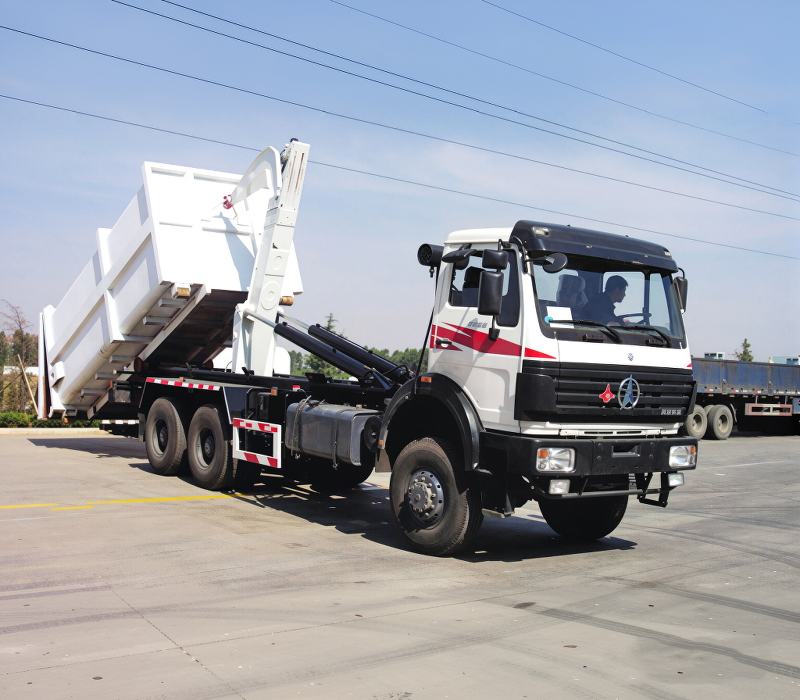
A 11,170 kg rated load on a 6 by 6 off-road chassis defines this unit, with a 27 MPa and 40 L per minute hydraulic circuit, fed by an imported Italian axial plunger pump, driving both the articulated loading arm and the tipping box.
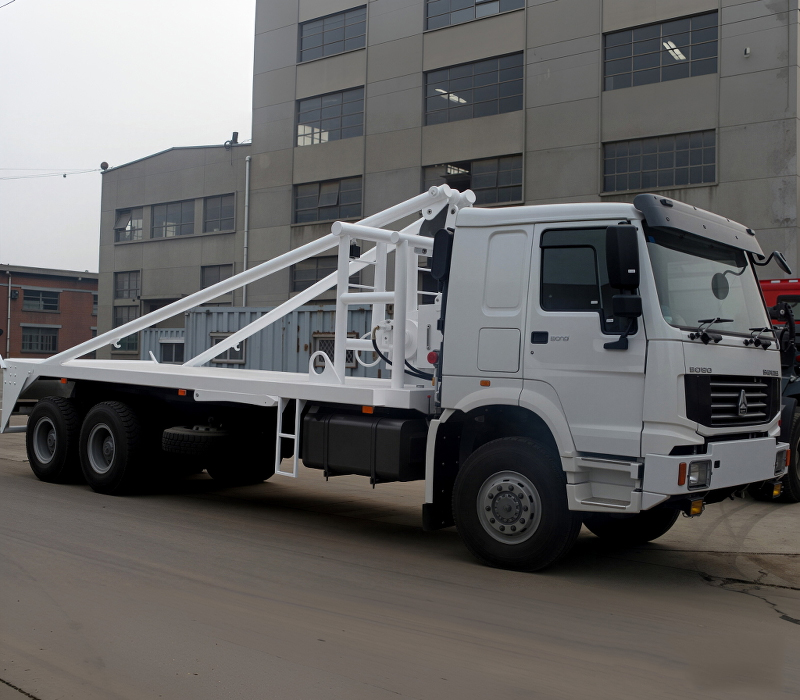
A 25 tonne winch line pull at the bottom layer, on 1-1/8 inch (28 mm) wire, is what this gin-pole truck hoists with, while the folding mast frame is rated to lift 15 tonnes and the flat deck carries a 20 tonne load.
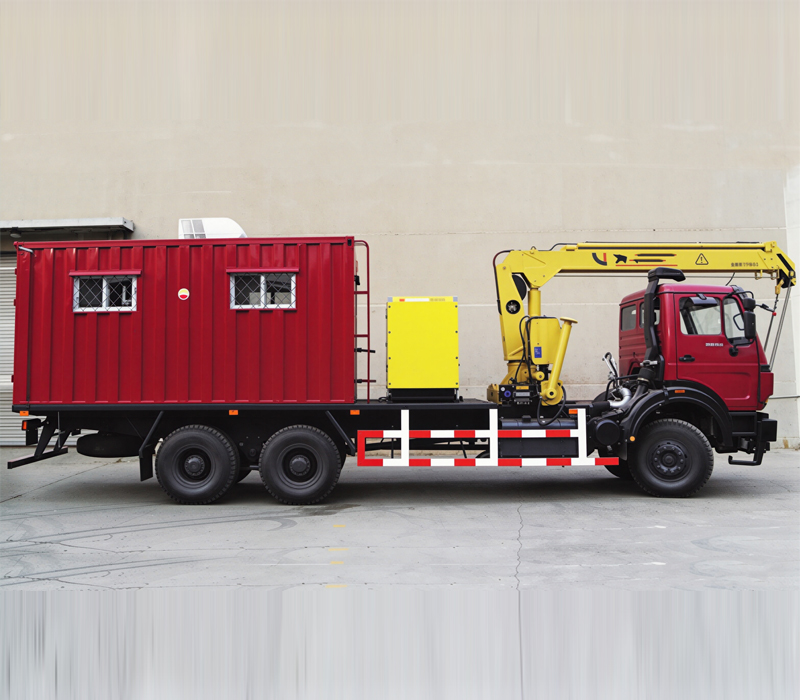
A 20 kW onboard diesel generator, with a 5.5 kW industrial air compressor behind it, makes this workshop self-sufficient: no shore power, no remote air line.
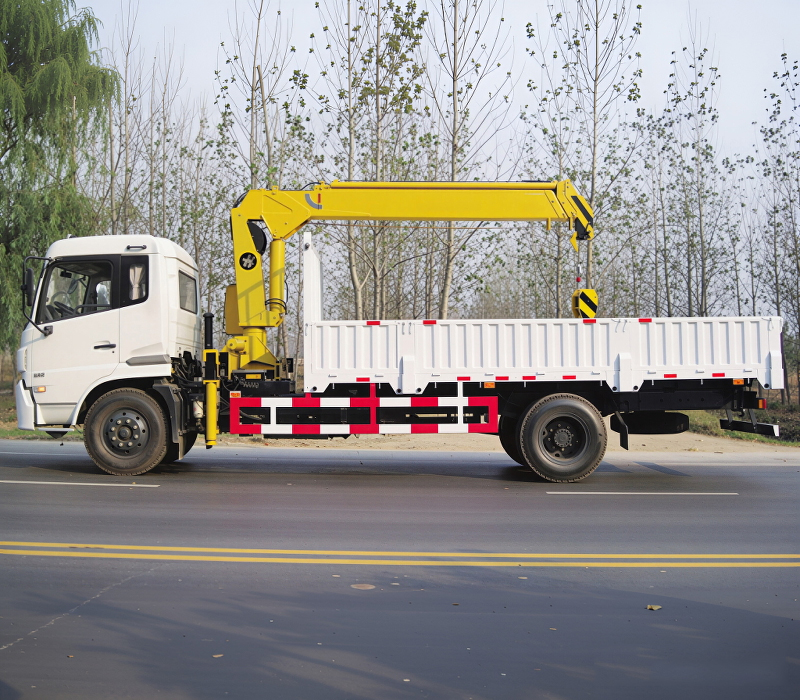
This unit lifts 8,000 kg at a 2.0 m radius, or 5,000 kg at 2.25 m, from a multi-section telescopic boom that reaches 15,000 mm fully extended, 10,500 mm on the shorter configuration, and then hauls a 9,140 kg payload on the flat carriage.
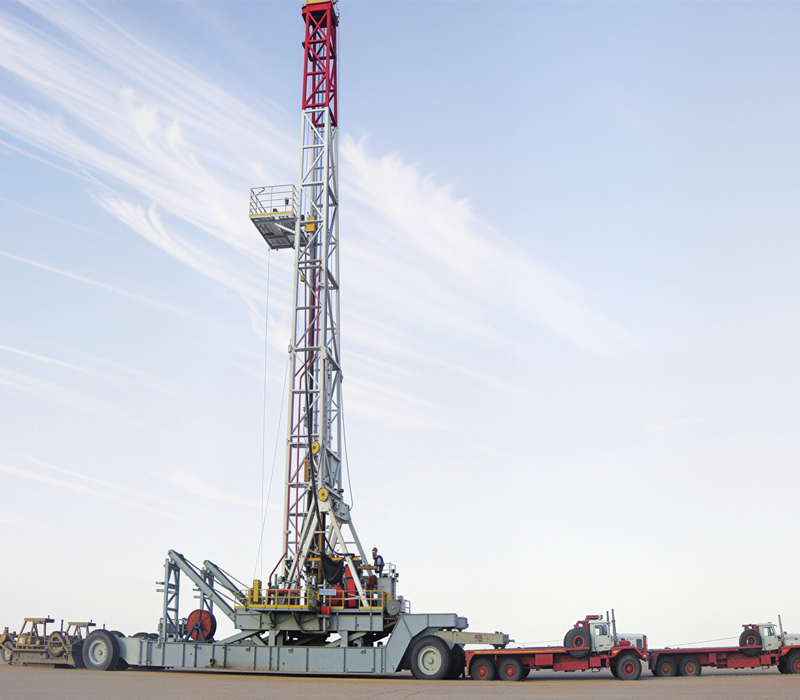
Designed to carry a whole 300 to 480 tonne land rig without splitting it, this self-propelled moving system is rated to shift up to 400 to 540 tonnes in solid-moving configuration, with mast, drawworks, power pack and floor riding as one load.
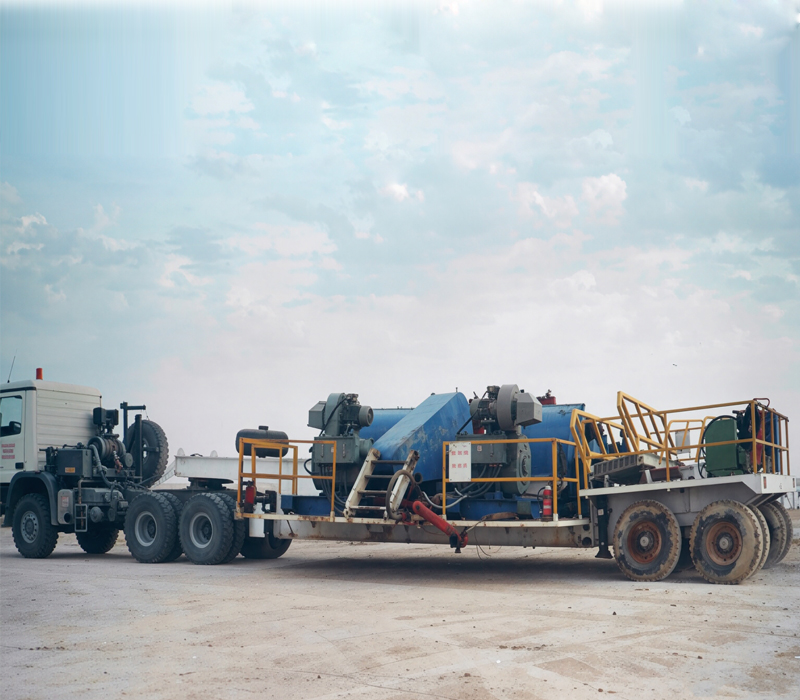
Where the main rig carrier moves 300 to 480 tonnes, this system moves the support side: generator-room and auxiliary skid sets of 80 to 160 tonnes, with a moving capacity of 100 to 200 tonnes on a 3-1/2 inch traction pin.
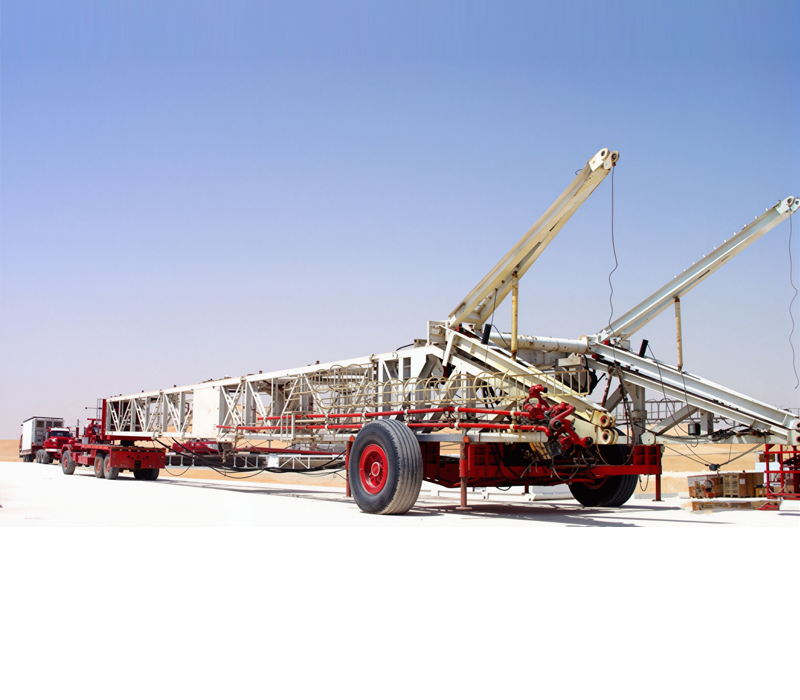
This carrier is purpose-built for the folded telescopic mast: 80 to 150 tonne rig masts move on a 100 to 180 tonne rated frame, at 10 km per hour, with 600 mm clearance and an 11,000 mm road-width allowance.
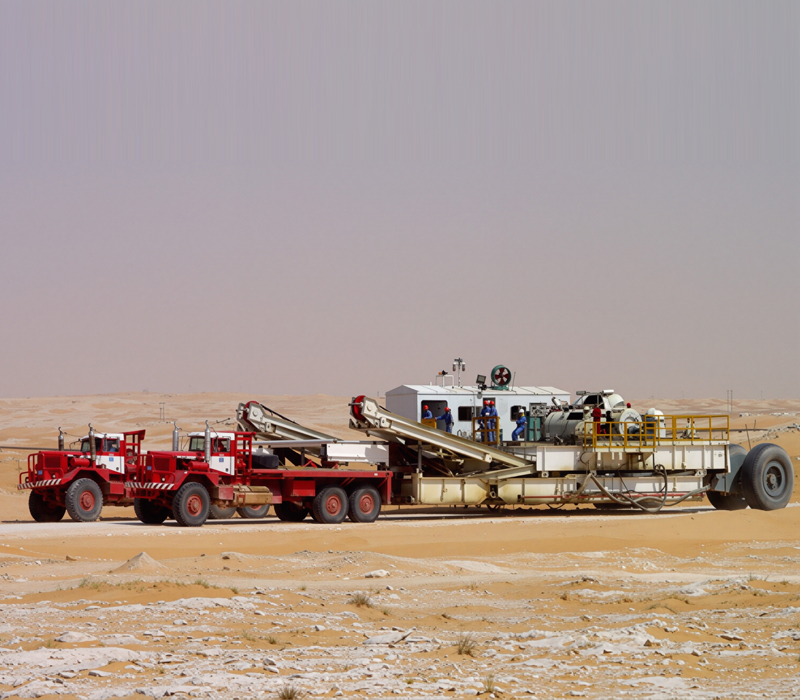
The rig substructure is the bottom 180 to 330 tonne block of the rig, and this skid mover is rated to shift it at 220 to 390 tonnes capacity, 10 km per hour, with 600 mm clearance on a 12,000 mm road width.
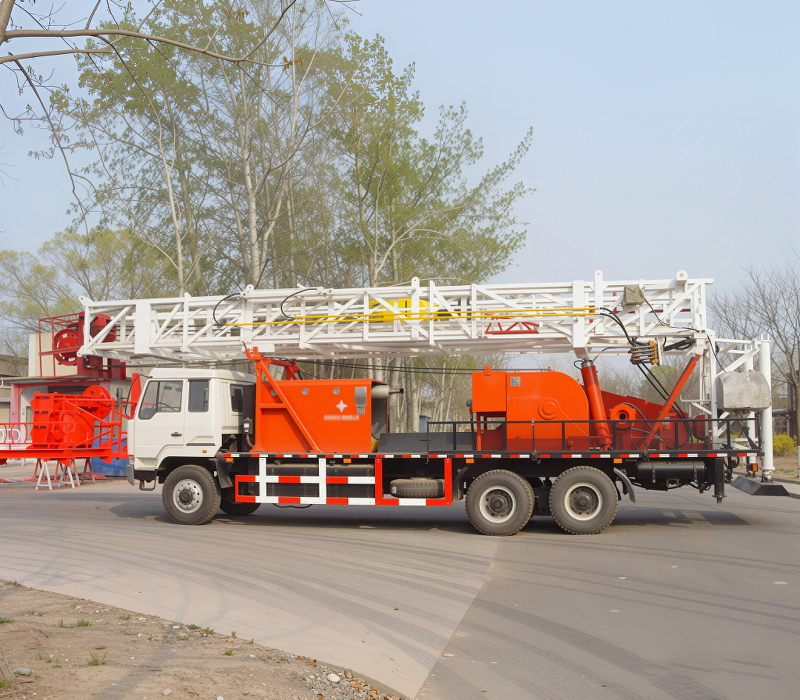
Rated at a 585kN maximum hook on a φ22mm line strung six lines, the XJ150 is sized for the shallow end of the workover fleet rather than deep-service duty.
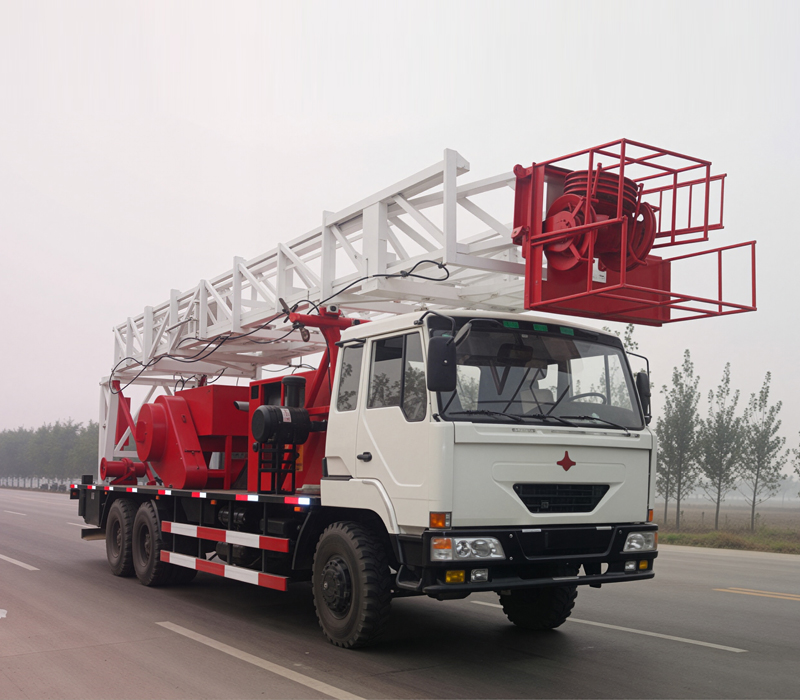
The XJ250 is the first truck in the fleet where hoisting speed starts to matter: a 675kN maximum hook on a φ22mm, six-line train runs the hook at up to 1.5 m/s, pulling 3200m of 2 7/8″ upset tubing in less time than a slower light rig.
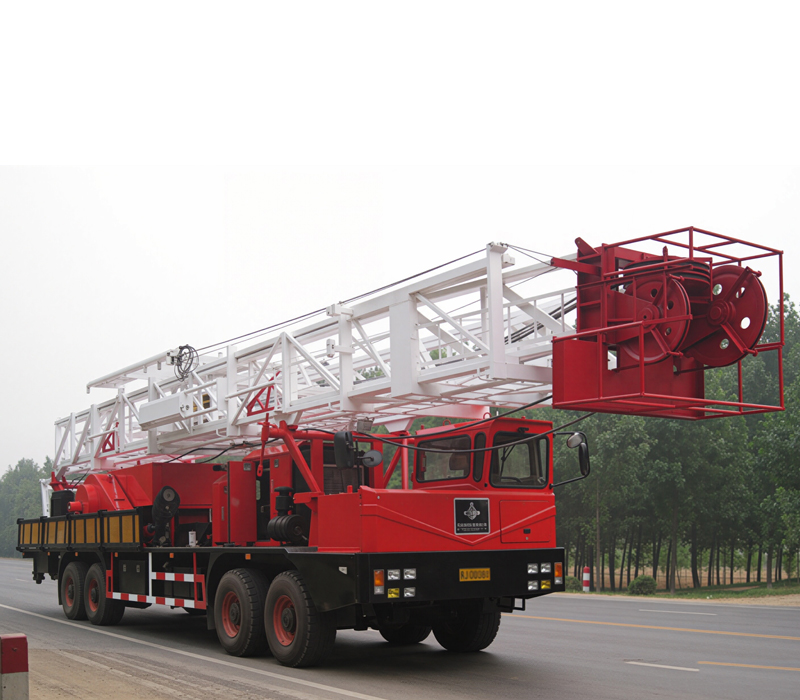
The XJ350 opens the heavy-duty tier: a 900kN maximum load on a 650kN nominal hook, reeved eight lines over Φ26mm drill line under a 23.5m mast.
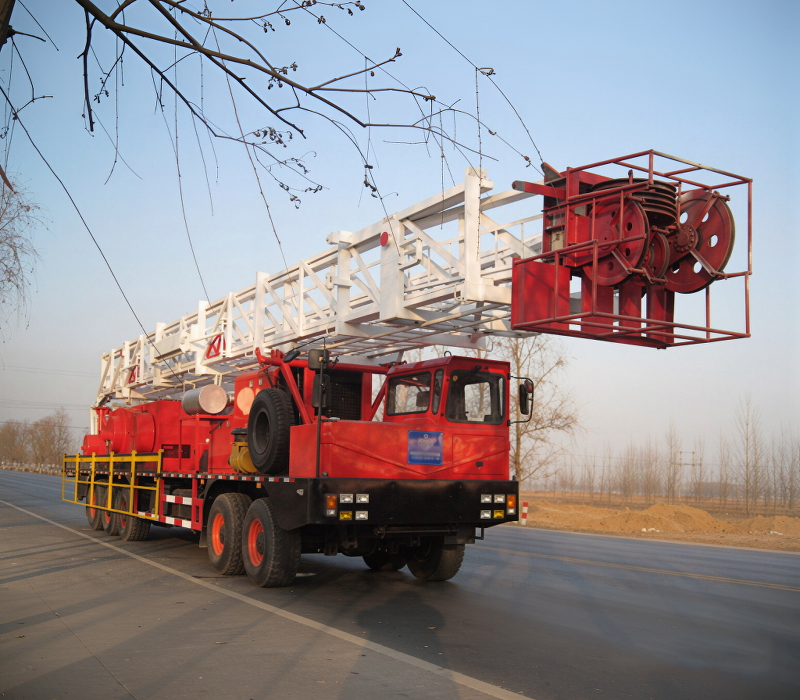
The XJ450's place in the lineup is defined by its hoisting train: a 1125kN hook rating on a 4×5 traveling system with Φ26mm drill line, backed by a mast that cleans 32m and holds 1200kN static.
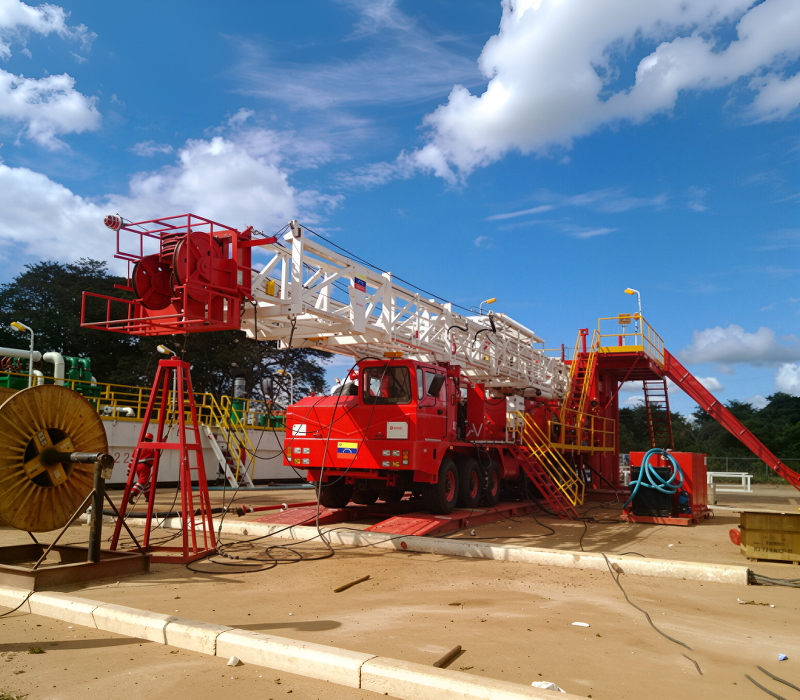
The XJ550 is rated at a 1350kN hook, the top of the conventional truck-mounted workover range, and it gets there with a Caterpillar C18 at 630 bhp through an Allison M6620AR rather than the C15 pack used one size below.
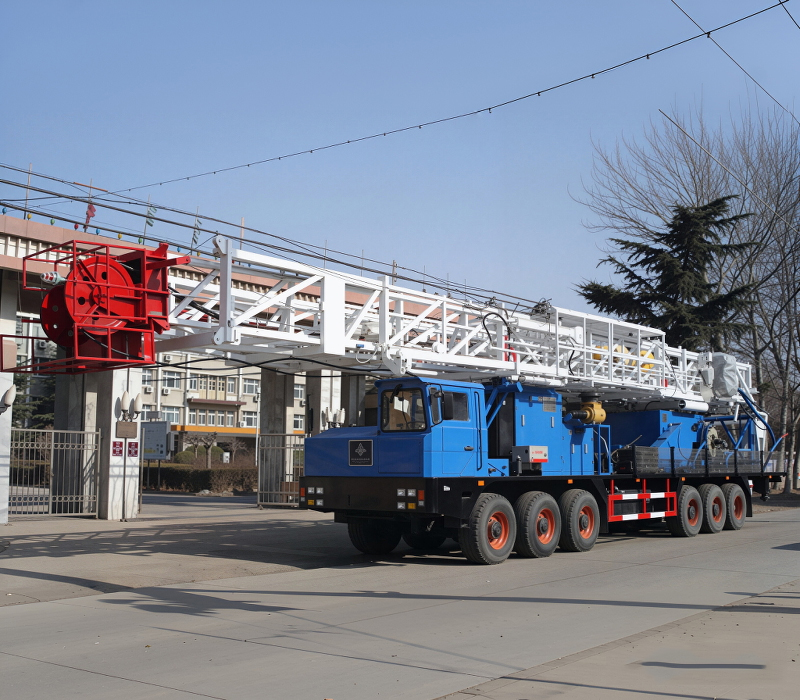
The XJ650 (XJ1600) is the fleet's flagship heavy rig, rated at a 1470kN maximum load on a 4×5 traveling gear reeved with Φ29mm, 1 1/8″ drill line over eight lines.
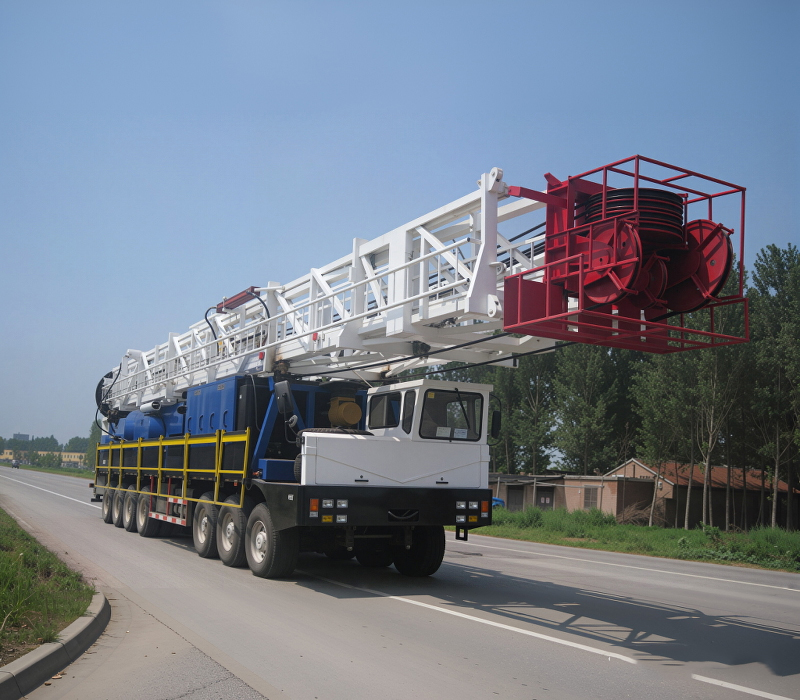
The XJ750 is the first rig in the fleet to split its power: twin Caterpillar C15 engines, each behind its own Allison M5620AR transmission, feed a single drawworks rated for a 280kN fast-line pull and 450rpm.
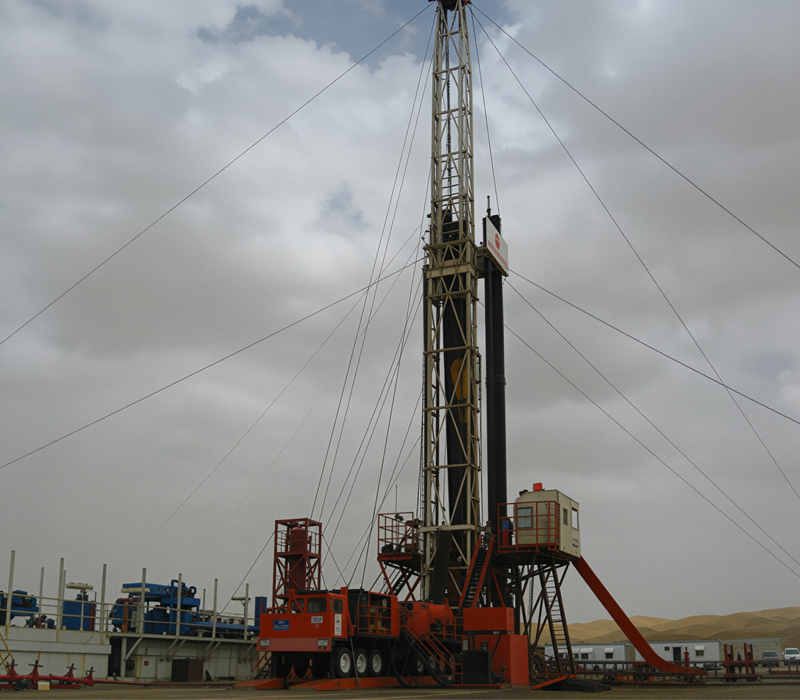
The XJ850 is the heaviest workover carrier the fleet builds, rated at a 2250kN hook on a 5×6 purchase strung with Φ32mm wire rope under a 39m lattice mast.
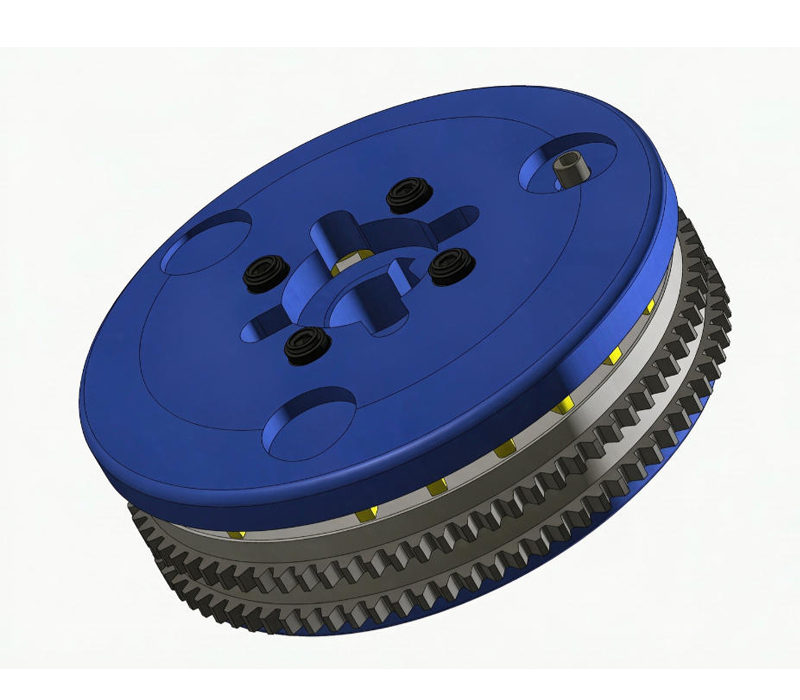
Spanning static torque from 8.1 kN.m on the ATD-214H to 110.8 kN.m on the ATD-330H, the ATD air-tube and push-disc clutch is the dry friction element that connects and disconnects the rig drawworks, mud pump and workover drivetrain.
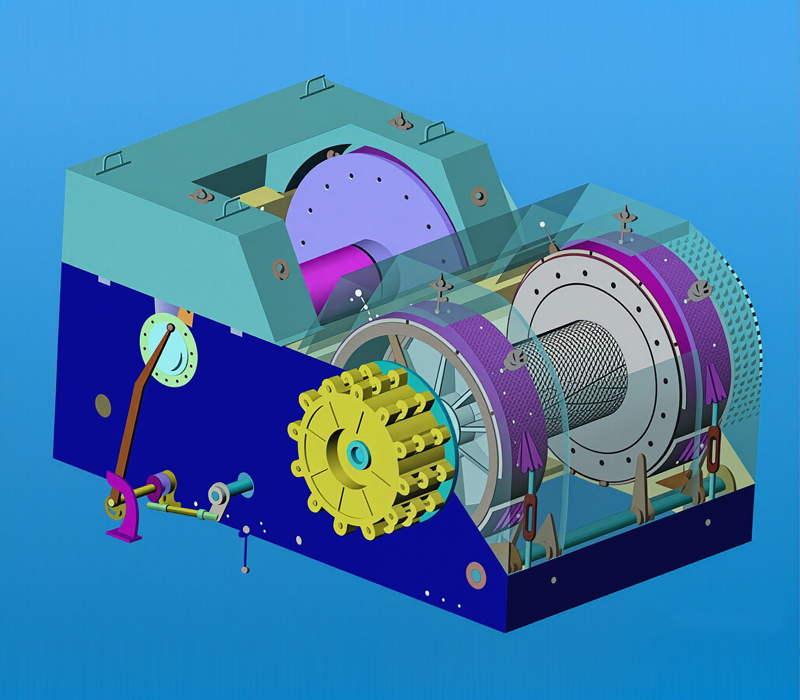
The JC series drawworks span input power from 150 kW on the JC08 to 600 kW on the JC28/11, with maximum fast-line pull on the second drum layer from 80 kN to 280 kN.
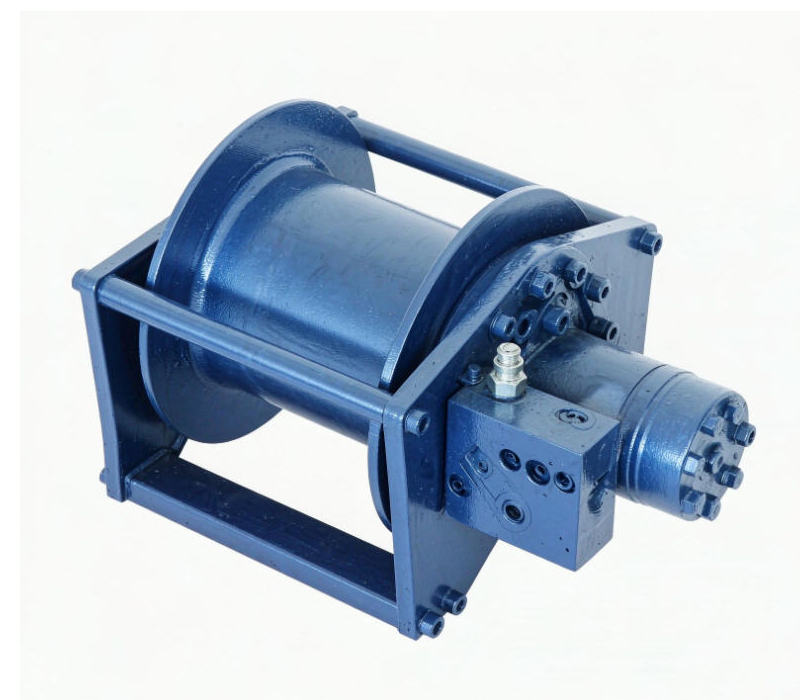
The YC3 and YC5 hydraulic winches cover 3-tonne and 5-tonne line pulls, driven hydraulically at 14 MPa on the YC3 and 16 MPa on the YC5.
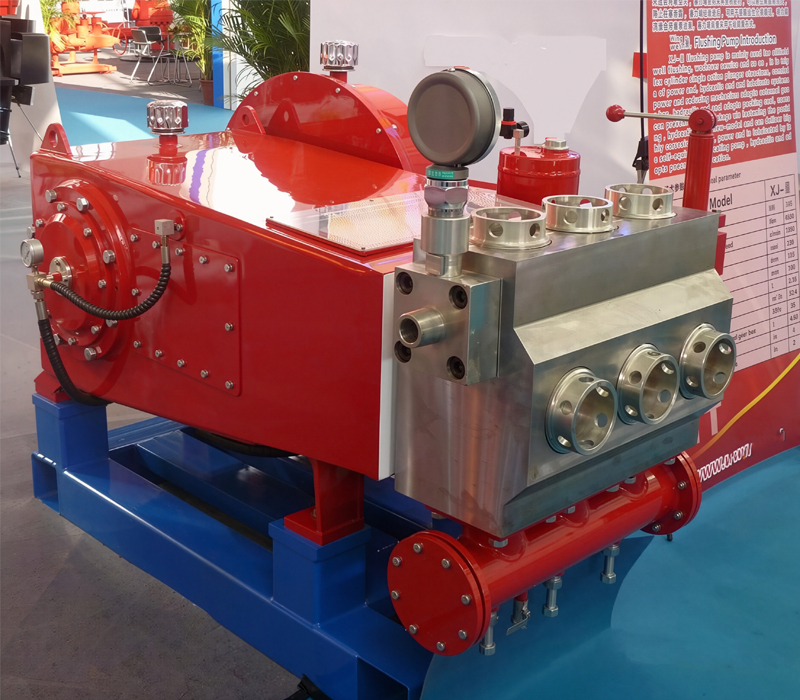
The 3ZB triplex plunger pump spans input power from 145 kW on the 3ZB-145 to 300 kW on the 3ZB-300, running at 280 SPM on the smaller two and 360 SPM on the 300.
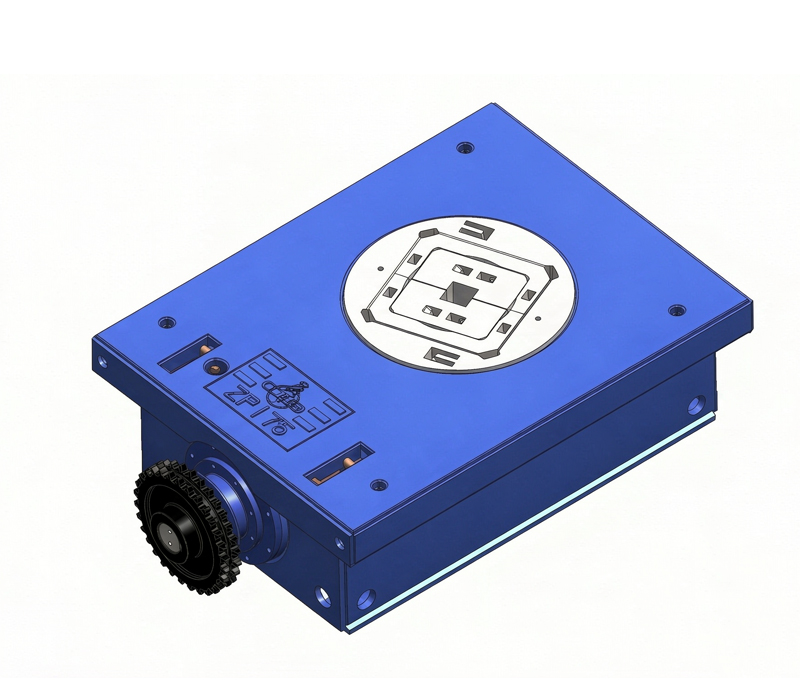
The ZP rotary table series spans through-hole diameters from 444.5 mm on the ZP175 and ZP175-1 to 520.7 mm on the ZP205, 698.5 mm on the ZP275 and 952.5 mm on the ZP375.
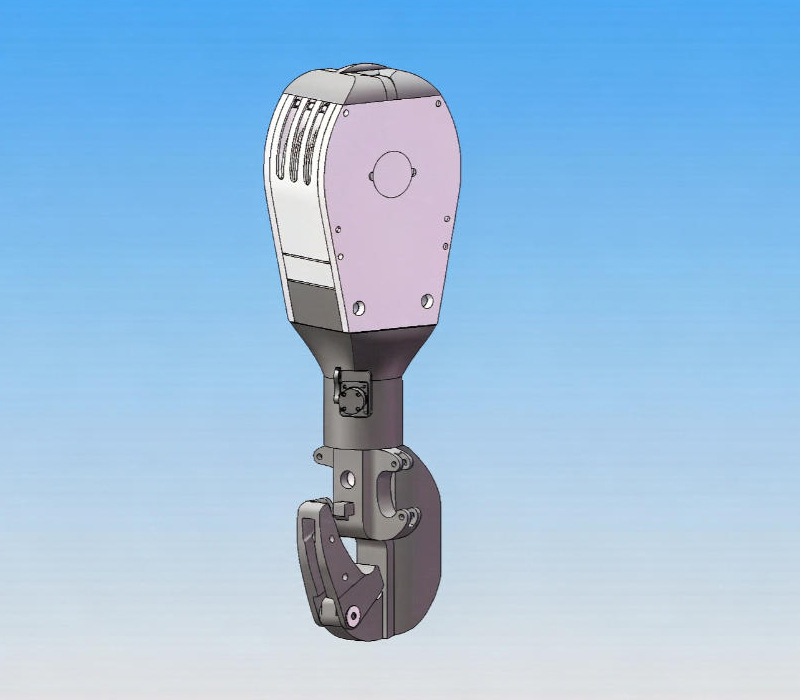
The YG travelling-block-and-hook series runs from the YG30 at 300 kN rated load to the YG270 at 2700 kN, with pulley sets of three to five sheaves strung on 22, 26, 29 or 32 mm wireline depending on model.
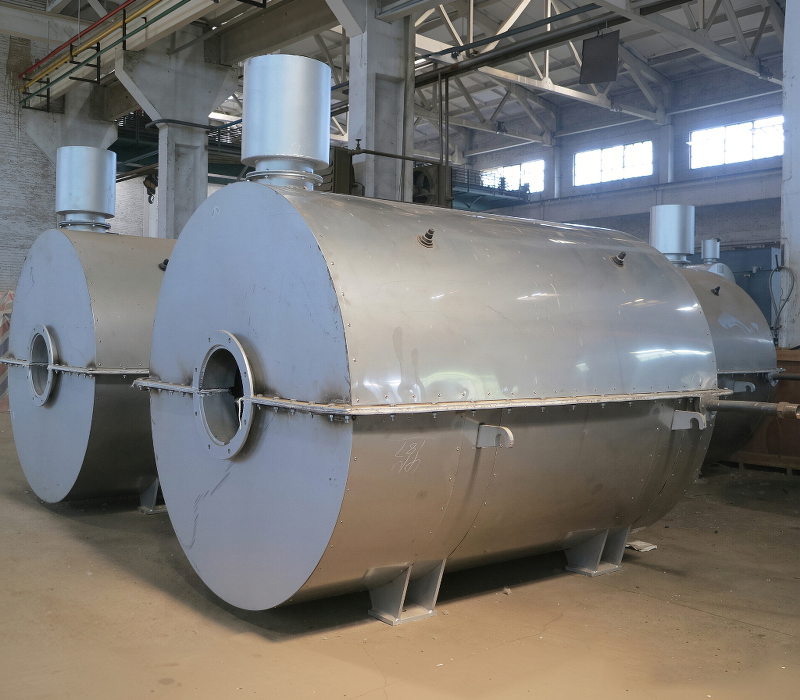
The truck-mounted special boiler is a horizontal direct-fired forced-circulation water-tube unit rated at 1000 kW, 700 kW or 350 kW heat output.
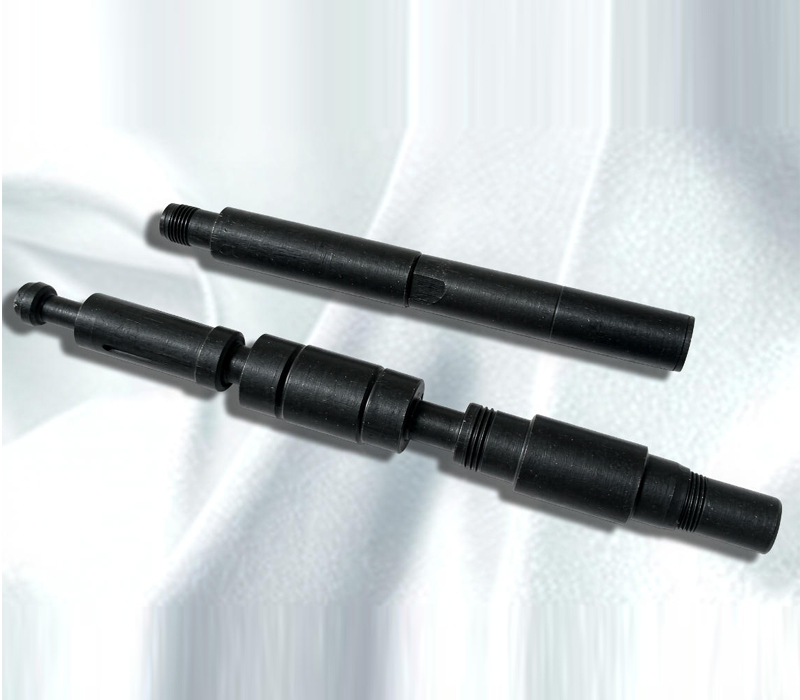
The YCZ swabbing tool series covers integral and semi-sectional builds at 5 1/2 in and 2 1/2 in sizes, with a maximum load-bearing capacity of 80 kN on the YCZ01 and YCZ02 and 50 kN on the smaller YCZ03.
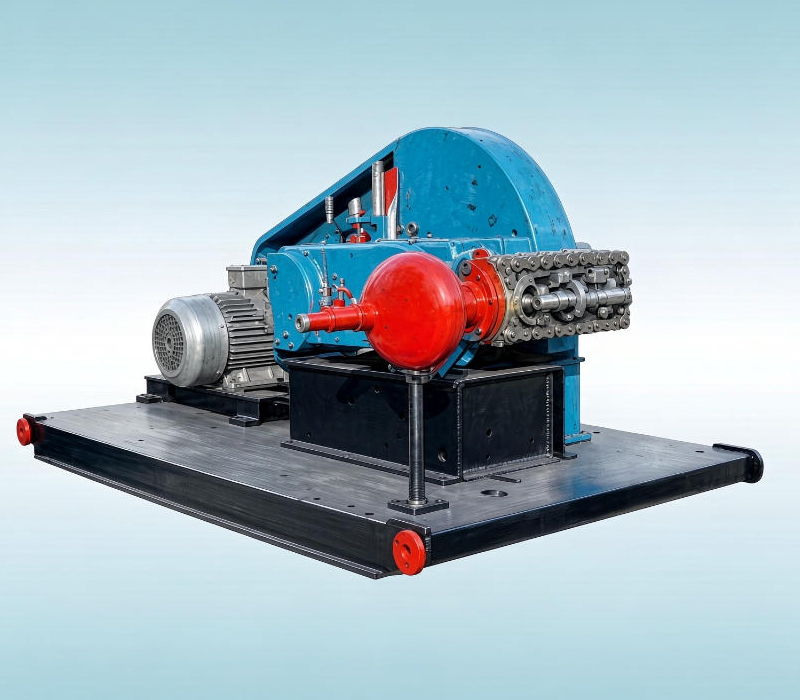
The ZJ water-injection pump series delivers outlet pressures from 13 MPa to 68 MPa with theoretical displacement between 4 and 36 m3/h, driven by motors from 55 to 185 kW.
Adjust the selected product line or filters to view more models.
Compare models by depth, hook load, pressure, mobility, fluid handling, site conditions and supporting equipment. Product details provide the technical starting point for a matched inquiry.