
100 to 180 t capacity for folded masts
The dedicated frame carries folded masts at a 100 to 180 tonne moving capacity, sized to the mast load rather than the whole rig weight, so derricks move without being split into lattice sections.
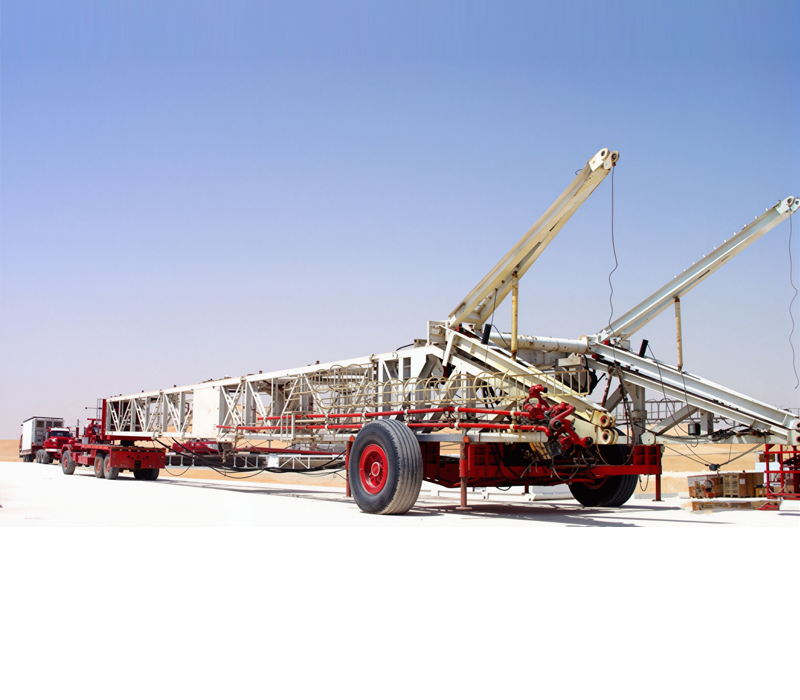
This carrier is purpose-built for the folded telescopic mast: 80 to 150 tonne rig masts move on a 100 to 180 tonne rated frame, at 10 km per hour, with 600 mm clearance and an 11,000 mm road-width allowance. The mast stays folded and intact, pulleys, lines and hydraulic piping still rigged, rather than being split into sections for transport, which is what protects the 28 m to 38 m lattice structure from the twist and weld damage that repeated teardown causes. At 10 km per hour it is the fastest of the site moving units, because the folded mast rides narrower and lighter than the substructure or whole-rig carrier. It pairs with the main moving system on the same cluster-well location, dedicated to the mast so that derrick erection, spotting and re-location stay within the 150 to 850 hp XJ range.
The dedicated frame carries folded masts at a 100 to 180 tonne moving capacity, sized to the mast load rather than the whole rig weight, so derricks move without being split into lattice sections.
It handles 80 to 150 tonne XJ masts across the 28 m to 38 m double-section telescopic lattice range, with adjustable fixtures set to the mast height at order time.
At 10 km per hour the mast carrier moves faster than the 8 km/h whole-rig and auxiliary units, because the folded mast is narrower and lighter once it lies down.
An 11,000 mm road-width allowance matches the folded-mast footprint, between the 6.6 m auxiliary routes and the 12 m whole-rig envelope.
Multi-point hydraulic lifting and shifting carries the folded mast as one piece, so pulleys, wire lines and hydraulic piping stay connected and no secondary re-rigging follows the move.
600 mm ground clearance and a -17 to +55 degree rated operating envelope let the mast carrier work across cold plateaus, deserts and wind-sand Gobi sites year round.
| Product | Rig Mast Moving Equipment |
|---|---|
| Product line | Rig Moving Systems |
| Basic performance | Design parameter |
|---|---|
| Max total weight of drilling rig(t) | 80~150 |
| Max moving capacity of drilling rig solid moving system (t) | 100~180 |
| Min clearance from ground (mm) | 600 |
| Max moving speed(km/h) | 10km/h |
| Width of application road(mm) | 11000 |
| Temperature of application environment(℃) | -17~55 |
For a useful technical response, include the target well conditions, operating depth or pressure, expected quantity, destination and any required configuration.
Send an InquiryAvailable configurations can be matched to the equipment model, operating conditions and project requirements.
The rig mast moving equipment questions cover mast weight range, transport method and disassembly needs.
No. The folded mast travels as one unit on the moving dolly: internal pulleys, wire line, hydraulic lines and electrical harness stay connected. The move is a lift-and-place rather than a strip-and-rebuild, which avoids component loss and re-alignment between wells.
It fully covers all telescopic lattice masts of 150HP to 850HP XJ series workover rigs, adapting to 28m to 38m different height specifications. The adjustable modular structure can match light, medium and ultra-heavy mast models, realizing full-product-line universal application.
Yes. Equipped with multi-point synchronous lifting and balanced stress structure, the equipment uniformly bears the mast load, avoiding local torsion and bending deformation caused by uneven force. The double anti-vibration and locking design ensures stable and firm mast fixation during long-distance transportation, fully protecting the structural accuracy of high-precision masts.
A traditional mast move splits the mast into sections, lifts each with crane and re-assembles on location, which adds crane days and invites fit-up error. This carrier moves the folded 28 m to 38 m mast as one piece at up to 10 km per hour, with pulleys, lines and hydraulic piping still rigged, so no second calibration follows the move. The saving is shorter well-to-well time on a cluster block rather than a lower per-job price.
Yes. The control package is settled against the rig before the order: balance correction, real-time mast stress monitoring, remote wireless control and automatic fault alarm are selected to match the mast height and the site layout, then written into the quotation. The monitoring readout follows the lift and shift so the operator sees mast stress and frame balance through the whole move.
Commercial terms are confirmed in the quotation for the exact configuration, quantity and destination.
Built to API 4F at the Jingzhou plant under ISO 9001:2015 quality management; the frame is proof-loaded to its 100 to 180 tonne moving capacity against 80 to 150 tonne XJ masts and run at the 10 km per hour rated speed before dispatch. It is set for 28 m to 38 m telescopic masts at order time, and the certificate scope is listed in the quotation.
Operation and maintenance manuals, chassis documentation and factory test reports are supplied; the hydraulic and electrical schematics are included for the client's service department.
Confirmed in the quotation according to configuration, quantity and destination.
Manuals, conventional spare parts and remote technical guidance are included; on-site commissioning and operator training can be arranged on request.
Payment schedule, Incoterms, port and packaging are agreed in the sales contract.
A recommended spare-parts list for the first operating period is provided with the quotation.
Explore nearby products to compare equipment scope before sending an inquiry.
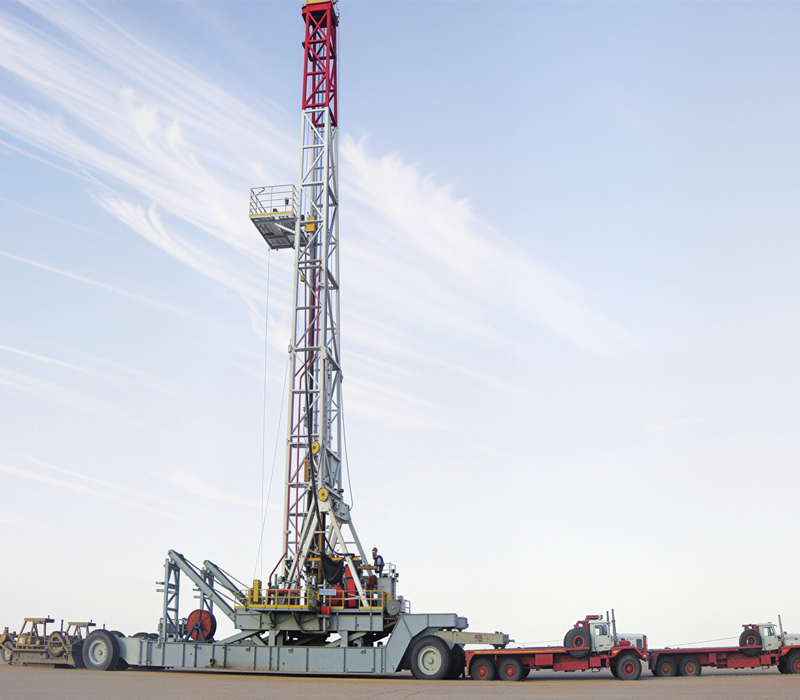
Designed to carry a whole 300 to 480 tonne land rig without splitting it, this self-propelled moving system is rated to shift up to 400 to 540 tonnes in solid-moving configuration, with mast, drawworks, power pack and…
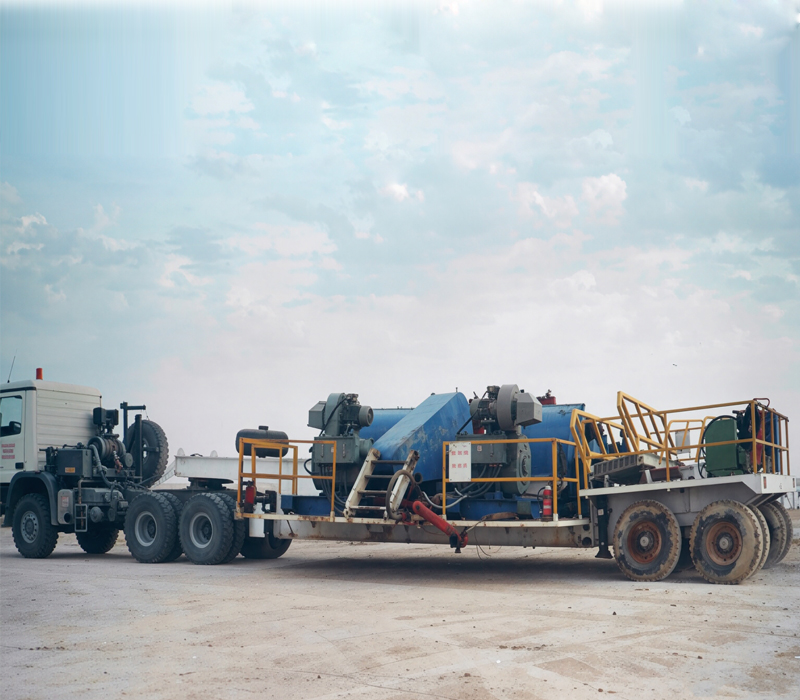
Where the main rig carrier moves 300 to 480 tonnes, this system moves the support side: generator-room and auxiliary skid sets of 80 to 160 tonnes, with a moving capacity of 100 to 200 tonnes on a 3-1/2 inch traction…
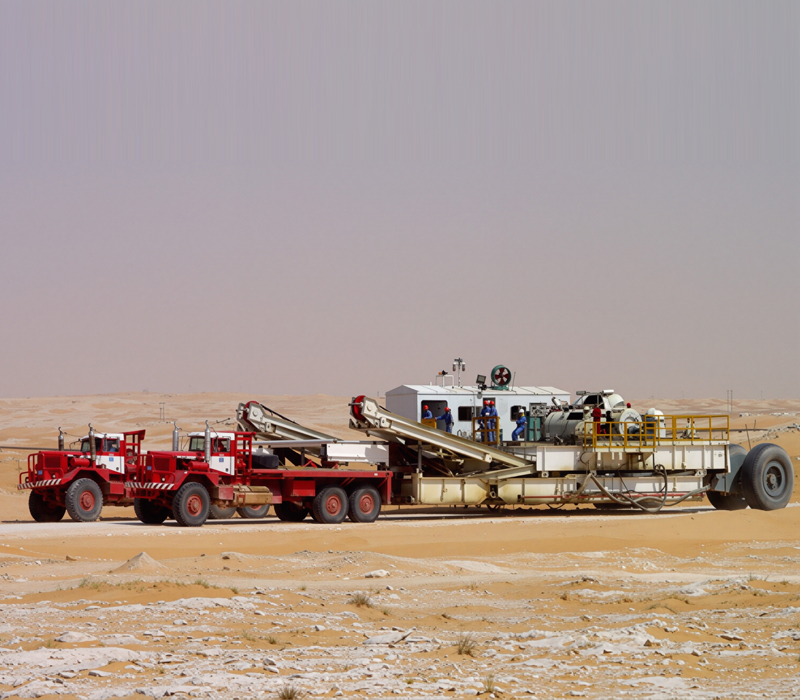
The rig substructure is the bottom 180 to 330 tonne block of the rig, and this skid mover is rated to shift it at 220 to 390 tonnes capacity, 10 km per hour, with 600 mm clearance on a 12,000 mm road width.