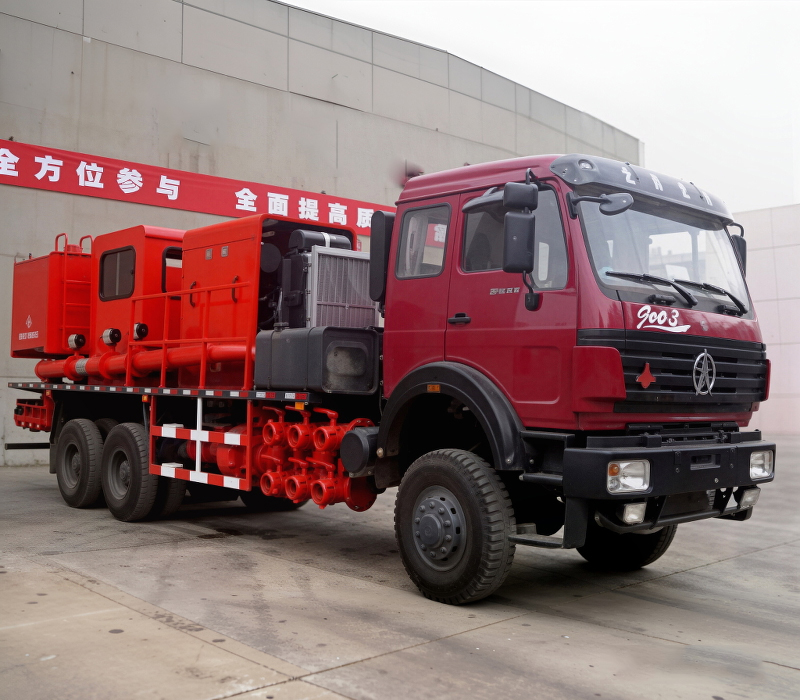
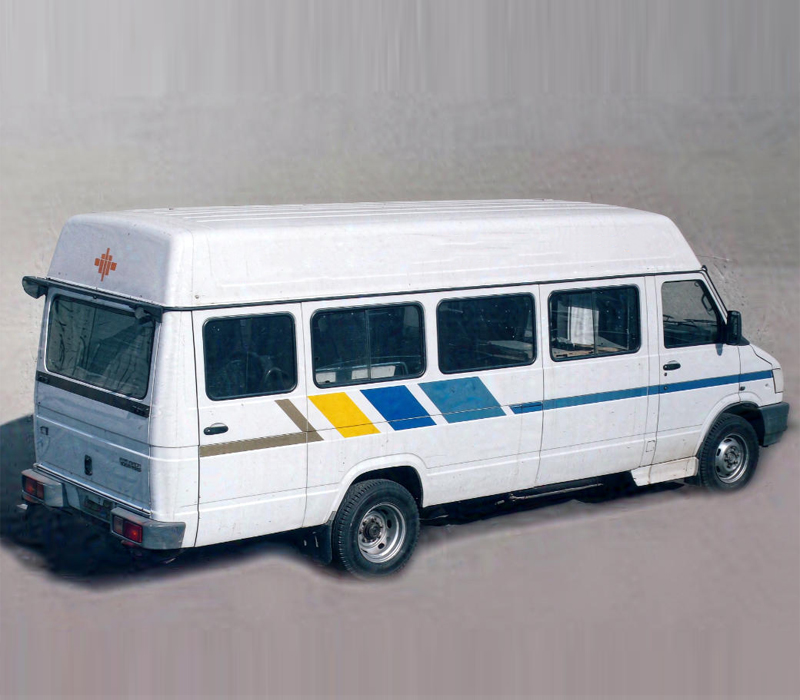
Instrument Vehicle oilfield equipment
Cementing & Fracturing Equipment

Instrument Vehicle

This is the control cabin of a cementing or fracturing spread, not a pump: a Siemens PLC center console with analog input-output modules sits inside a 4x2 or 4x4 chassis, networked through a looped-plus-star control architecture and backed by 8-12 Motorola radios over a 50 m working radius. From this cabin the operator watches pressure, rate and density from each pump and mixer, talks to the hand positions, and holds the whole job to one synchronized sequence. The sealed, climate-controlled cabin carries that instrumentation and the intercom team through desert, Gobi and plateau locations without the jolt and dust of an open field office.

Core advantages

Designed around the operating requirement.

Siemens PLC center console

The control desk is built around a Siemens PLC with analog input and output modules, the brain that reads pump pressure, displacement and density and drives them back to set point. Analog I/O is kept close to the instruments to preserve signal quality on a noisy wellsite.
Looped and star network

Field devices are wired on a looped-plus-star control network, so a break in one segment does not blind the whole cabin - the ring routes traffic the other way while the star drops in individual pump and mixer nodes. That redundancy is why the console stays live through a job.

8-12 Motorola radios at 50 m

The intercom rack holds 8 to 12 Motorola handsets covering a 50 m radius, enough to staff the pump truck, blender, fluid supply and wellhead positions on one clear channel. Cabling and handsets are checked as part of the pre-job commission.

Sealed climate-controlled cabin

The instrument cabin is sealed and insulated with temperature and humidity control, so the PLC and radios hold calibration through summer heat and winter cold instead of drifting with a tent or open-truck environment. Dust and rain seals keep field grit off the contact sets.

Anti-vibration instrument mounting

Sensors and recorders bolt to damped anti-vibration racks rather than directly to the floor, which removes road and pump vibration from the measurement path. Shielded harnesses isolate the data lines from the spread's electrical noise.

Independent power supply

A dedicated, low-noise generator and stabilized distribution panel power the console and radios independently of the truck's drive engine, so control stays up even when the chassis engine cycles. Line conditioning protects the PLC from spikes common on oilfield power.

Product Overview
ProductInstrument Vehicle
Product lineCementing & Fracturing Equipment
Technical Specifications
Chassis4×2 / 4×4
Center ConsoleSiemens PLC, analog input and output module
Intercom system8~12 sets of motorola Moto Radio
Communication distance50m
Control systemLooped network + star network control system
Application

Where this equipment is used.

  • Central control for cementing and fracturing spreads: monitoring pressure, rate and density from each pump and mixer in one cabin.
  • Synchronizing pump, mixer and hand positions to one job sequence over the 50 m radio working radius.
  • Data logging and job recording on the Siemens PLC platform with analog I/O modules.
  • Operating in the 4×2 or 4×4 chassis as the mobile command post of the spread.
  • Rapid redeployment between jobs on the truck-mounted unit.
  • Climate-controlled operation in desert, Gobi and high-altitude sites.
Next step

Send the operating requirement.

For a useful technical response, include the target well conditions, operating depth or pressure, expected quantity, destination and any required configuration.

Send an Inquiry
Configuration

Options for a matched equipment scope.

Available configurations can be matched to the equipment model, operating conditions and project requirements.

  • Control platform: Siemens PLC and I/O module count confirmed against the number of pumps and mixers.
  • Radio set: 8–12 Motorola radios and the 50 m working radius matched to the spread layout.
  • Network: looped-plus-star control architecture is standard; redundancy options can be discussed.
  • Cabin: climate control, sealing and hazardous-zone electrical provisions confirmed for the region.
  • Chassis: 4×2 or 4×4 fitment and road requirements confirmed.
  • For Instrument Vehicle: manuals, factory test report and first-period spares included; commissioning and operator training arranged on request.
Buyer questions

Frequently asked about this equipment.

Questions about the instrument vehicle cover control-room fit, PLC scope and radio intercom sets.

What is the main function of the Oilfield Instrument Vehicle?

The instrument vehicle is the control cabin of a cementing or fracturing spread, not a pump: a Siemens PLC center console with analog input-output modules, a looped-plus-star control network and 8-12 Motorola radios over a 50 m working radius ride in a sealed, climate-controlled 4x2 or 4x4 chassis. From this cabin the operator watches pressure, rate and density from each pump and mixer, coordinates the hand positions and holds the whole job to one synchronized sequence, in a cabin sealed against desert dust, Gobi wind and plateau temperature swings.

Why is constant temperature and anti-vibration design important for instrument vehicles?

Oilfield precision logging instruments are extremely sensitive to temperature, vibration and dust. Extreme temperature changes cause electronic component failure, and field vibration leads to instrument damage and data deviation. The constant temperature and anti-vibration design effectively avoids environmental interference and ensures the accuracy of detection data and the service life of precision equipment.

What field working conditions can the instrument vehicle adapt to?

The vehicle adopts heavy-duty off-road chassis and full-climate protection design, adapting to desert high temperature, Gobi wind-sand, high-altitude low temperature, muddy roads and remote complex well sites. It supports stable outdoor operation all year round and meets the mobile operation demands of various harsh oilfield environments.

How to ensure stable power supply and data safety on site?

A dedicated low-noise generator and a stabilized distribution panel power the console and radios independently of the truck's drive engine, so control stays up even when the chassis engine cycles. Shielded wiring and anti-interference circuit design isolate external electromagnetic noise, keeping the PLC signal path stable and the job record accurate on site.

Can vehicle configuration and functional parameters be customized?

Yes. The configuration is settled against the spread before the order: cabin layout, Siemens PLC and analog I/O module count, radio set (8-12 Motorola handsets), temperature control range, power supply configuration and anti-interference measures are matched to the number of pumps and mixers, the 50 m working radius and the region's climate and electrical-hazard rules, then written into the quotation and the factory test report.

Procurement information

Ordering this equipment.

Commercial terms are confirmed in the quotation for the exact configuration, quantity and destination.

Certification & standards

Built at the Jingzhou plant under ISO 9001:2015 quality management, the instrument vehicle is engineered for mobile logging and data-acquisition work; the chassis, power supply, cabling routing and equipment mounting racks are inspected through a full factory acceptance test.

Documentation

Operation and maintenance manuals, chassis documentation and factory test reports are supplied; the hydraulic and electrical schematics are included for the client's service department.

Lead time

Confirmed in the quotation according to configuration, quantity and destination.

Warranty & after-sales

Manuals, conventional spare parts and remote technical guidance are included; on-site commissioning and operator training can be arranged on request.

Payment & delivery

Payment schedule, Incoterms, port and packaging are agreed in the sales contract.

Spare parts

A recommended spare-parts list for the first operating period is provided with the quotation.