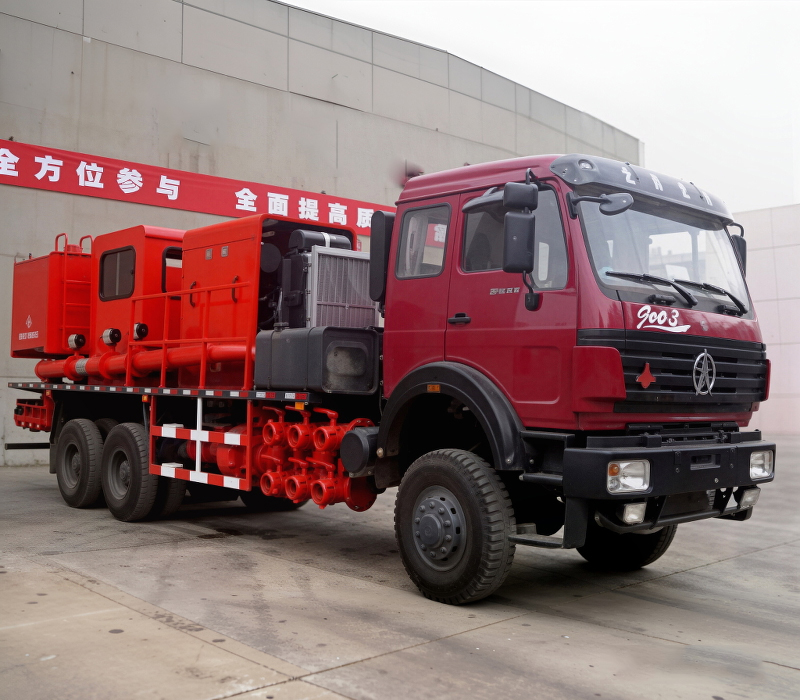
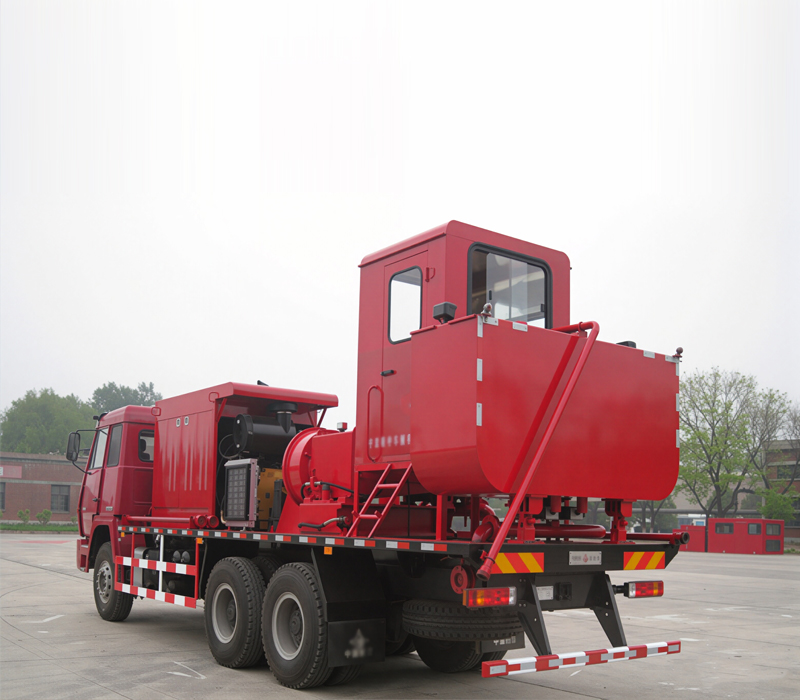
Truck mounted Cementing Equipment oilfield equipment
Cementing & Fracturing Equipment

Truck mounted Cementing Equipment

The truck-mounted cementing range is specified by two pressure classes and two drive options. The 400 class is rated 40 MPa and comes in a hydraulic version that delivers 100 m3/h or a mechanical version at 71.8 m3/h; the 700 class steps up to 70 MPa, offered as a hydraulic unit at 60 m3/h or a mechanical unit at 84 m3/h. Buyers match the class to the well - the 400 for conventional and medium-depth primaries, the 700 for deeper and higher-pressure remedial work - and then choose hydraulic or mechanical drive for the operating budget and maintenance team. Every unit in the line is truck-mounted, mixing-and-pumping integrated, and API-built, so the same crew, spares and deployment routine cover the whole range.

Core advantages

Designed around the operating requirement.

40 MPa 400-class, 70 MPa 700-class

The range splits at 40 MPa and 70 MPa. The 400 class serves routine primary and squeeze cementing; the 700 class carries the deeper, higher-pressure placements. Picking the right class avoids over-specing a shallow well or under-rating a deep one.
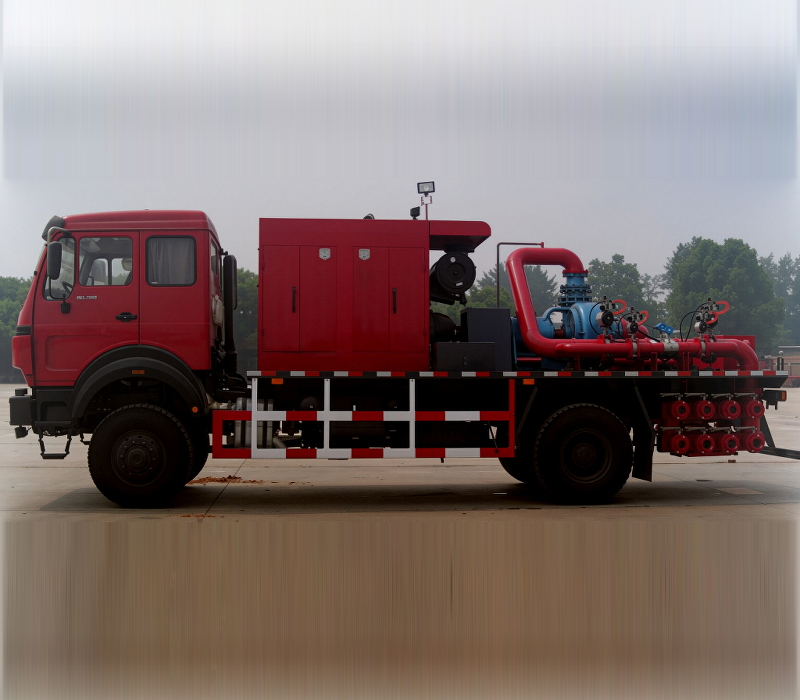
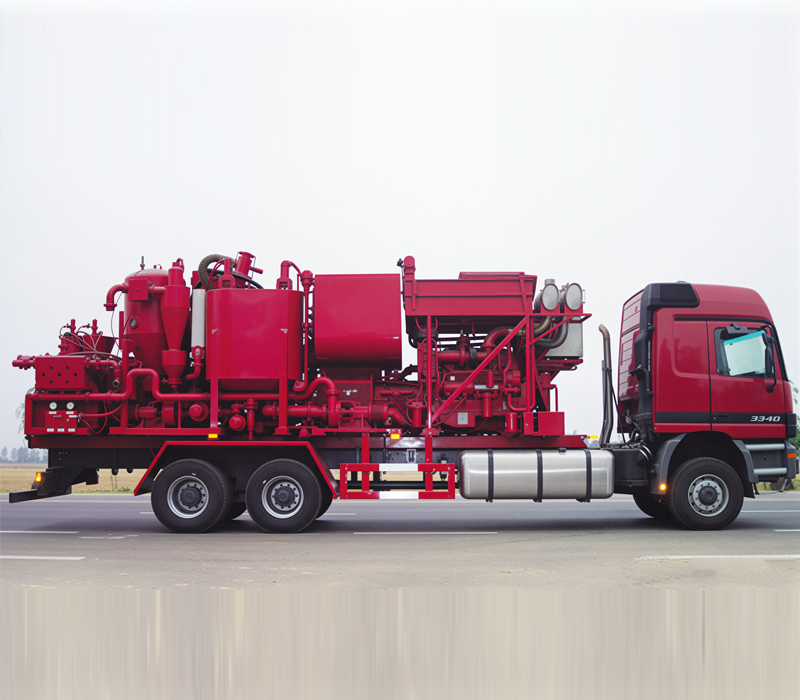
Hydraulic or mechanical drive

Within each class the buyer chooses hydraulic drive - 100 m3/h on the 400, 60 m3/h on the 700 - or mechanical drive - 71.8 m3/h on the 400, 84 m3/h on the 700. Hydraulic gives stepless control; mechanical gives a simpler drivetrain a field crew already knows.

Truck-mounted integrated deck

Mixing tank, high-pressure manifold, drive and control cabinet ride on one off-road chassis, so the unit drives to location, connects and starts without module assembly. The range uses a common deck layout, which keeps mobilization the same whether the truck is a 400 or a 700.

Stepless slurry pump control

The hydraulic units drive the plunger pump through a stepless speed-adjust transmission, trimming pressure and displacement through the cement sequence, while the mechanical units use a fixed-ratio drive for a steady rate. Both suppress manifold pulsation for a clean downhole column.

Series-wide monitoring and logging

Across the range the control platform reads cementing pressure, displacement and slurry density and records the job for the cementing report. A common interface means an operator certified on one class can move between the 400 and 700 with minimal re-training.

One fleet, one parts list

Because the 400 and 700 share a platform, wear parts, manuals and the service routine line up across the series, and a single wear package covers desert, Gobi and plateau deployment. Total cost of ownership is tracked per class rather than per unique truck.

Product Overview
ProductTruck mounted Cementing Equipment
Product lineCementing & Fracturing Equipment
Technical Specifications
Performance parameter400 type cementing truck700 type cementing truck
HydraulicMechanicalHydraulicMechanical
Max. pressure MPa40407070
Max. displacement m3/h10071.86084
Application

Where this equipment is used.

  • Class selection by well: the 400 class (40 MPa) for conventional and medium-depth primaries, the 700 class (70 MPa) for deeper and higher-pressure remedial work.
  • Hydraulic drive at 100 m³/h (400 class) or 60 m³/h (700 class) against the mechanical versions at 71.8 and 84 m³/h.
  • Matched drive choice for the operating budget and maintenance team on site.
  • Rapid redeployment between pads on the truck-mounted chassis.
  • Continuous cementing programmes held at rated pressure and displacement.
  • For desert, Gobi or high-altitude locations, the Truck mounted Cementing Equipment climate package and coating are matched to the site at order time.
Next step

Send the operating requirement.

For a useful technical response, include the target well conditions, operating depth or pressure, expected quantity, destination and any required configuration.

Send an Inquiry
Configuration

Options for a matched equipment scope.

Available configurations can be matched to the equipment model, operating conditions and project requirements.

  • Class: 400 type or 700 type selected against the well depth and pressure programme.
  • Drive: hydraulic or mechanical transmission confirmed against the site power and maintenance capability.
  • Mixing and density: slurry mixing and density control matched to the job.
  • Well-control fit: manifold and cement head matched to the casing programme.
  • Cold-climate fit for Truck mounted Cementing Equipment: low-temperature start, heat preservation and coating confirmed against the operating site.
  • Documents and after-sales for Truck mounted Cementing Equipment: operation manuals, factory test report and first-period spares are included; on-site commissioning and crew training can be arranged.
Buyer questions

Frequently asked about this equipment.

Buyers evaluating truck-mounted cementing equipment usually ask about pump rating and field mobility.

What is Truck-mounted Cementing Equipment?

It is a series of vehicle-integrated mobile cementing units including single-pump and double-pump cementing trucks. It covers cementing tasks from shallow conventional wells up to 7000-meter ultra-deep wells, providing flexible mobile cementing capacity for various onshore oil-gas field projects.

How to choose between single-pump and double-pump cementing unit?

Single-pump model suits 0-4500m shallow-medium depth wells, for routine cementing jobs with cost-effective compact performance. Double-pump unit is recommended for 3000-7000m medium-deep / ultra-deep wells where large displacement, high pressure and pump-standby redundancy are needed to reduce construction shutdown risk.

Can truck-mounted cementing equipment hold constant-pressure and constant-displacement cementing?

Yes. The hydraulic units drive the plunger pump through a stepless transmission, trimming pressure and displacement through the cement sequence, while the control platform samples pressure, rate and density and logs the job for the cementing report. That keeps the slurry column uniform at the casing instead of drifting with manual throttle.

Does this series support continuous operation in extreme-climate oil-field environments?

Yes. Standard operating temperature range-40℃ ~ +55℃. Optional low-temperature startup, thermal-preservation and anti-sand-corrosion packages enable stable year-round operation for plateau, desert and Gobi oil-fields.

Can configurations and technical parameters be customized?

Yes. The configuration is settled against the well program before the order: pump quantity, pressure-displacement rating (40 MPa or 70 MPa class; hydraulic or mechanical drive), explosion-proof electrical grade and the control and logging package are matched to well depth, formation conditions and local oilfield safety rules, then written into the quotation and the factory test report.

Procurement information

Ordering this equipment.

Commercial terms are confirmed in the quotation for the exact configuration, quantity and destination.

Certification & standards

Manufactured to API oilfield equipment standards at the Jingzhou plant under ISO 9001:2015 quality management, with every 400-class unit pressure-tested to 40 MPa and every 700-class unit to 70 MPa on the shop stand before release; certificate scope and applicable standards are listed in the quotation.

Documentation

Cementing unit manuals, pump performance curves and pressure-vessel test reports are supplied; the batch mixer and manifold drawings are provided for integration with the client's cementing spread.

Lead time

Confirmed in the quotation according to configuration, quantity and destination.

Warranty & after-sales

Manuals, conventional spare parts and remote technical guidance are included; on-site commissioning and operator training can be arranged on request.

Payment & delivery

Payment schedule, Incoterms, port and packaging are agreed in the sales contract.

Spare parts

A recommended spare-parts list for the first operating period is provided with the quotation.