
Technical fit
Check the cementing or fracturing unit against the required pressure, displacement, fluid type and mixing accuracy, because those figures, not the pump name, decide the match.
Organize the pumping, mixing, fluid supply, monitoring and transport scope around the well program and the working fluid.
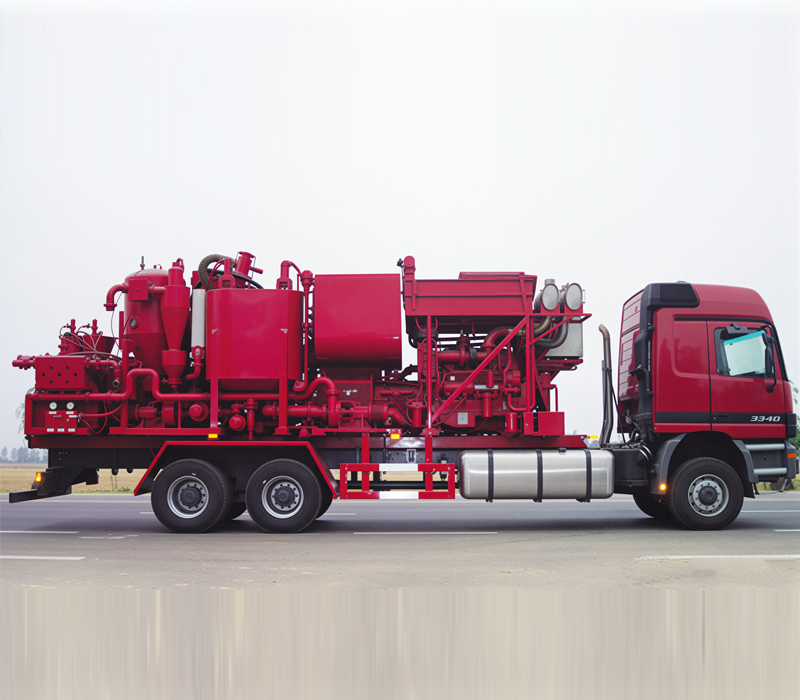 Operating requirement
Cementing and fracturing equipment should be selected around required pressure and displacement, fluid type, well depth, site mobility and the amount of monitoring required during the operation.
Check the cementing or fracturing unit against the required pressure, displacement, fluid type and mixing accuracy, because those figures, not the pump name, decide the match.
Ask the supplier to confirm the pump model, drive form, densitometer and manifold scope included in the package before treating the quotation as comparable.
Provide the well stage, slurry volume, required pressure and displacement, fluid type, quantity and destination so the response covers the pumping scope, not just a pump price.
The cementing line in the ZYT range is built around two published duty figures: maximum working pressure and maximum theoretical displacement. The truck-mounted units and the skid-mounted unit share the same pressure rating, so the practical choice is made on displacement, mobility and the mixing system:
| Parameter | Double-pump cementing truck | Single-pump cementing truck | Skid-mounted cementing unit |
| Max. working pressure | 70 MPa | 70 MPa | 70 MPa |
| Max. theoretical displacement | 100 m³/h | 100 m³/h | 84.6 m³/h |
| Max. slurry density | 1.0-2.4 g/cm³, accuracy ±0.024 g/cm³ | ||
| Slurry-mixing capacity | 0-2.3 m³/min | 0-2.3 m³/min | 0-2.3 m³/min |
| Chassis | Beiben ND2254F50J 6×6 | Beiben ND2254F50J 6×6 | None (fixed skid) |
| Engine | Detroit S60 475 bhp @ 2100 RPM | Detroit S60 475 bhp @ 2100 RPM | External power, 300 kW pump input |
| Transmission | Allison 4700FS (5F + idle) | Allison 4700FS (5F + idle) | Skid-mounted layout |
| Triplex plunger pump | 3ZB-265, 3ZB-300 (optional) | ||
The double-pump and single-pump trucks carry the same engine and transmission package and both reach 100 m³/h, so the double-pump configuration is chosen for redundancy and parallel pumping on large-volume or deep-well jobs, while the single-pump layout simplifies operation and maintenance on conventional wells.
The 400 type and 700 type cementing trucks published in the series make the trade-off explicit. The 400 type is rated 40 MPa with 100 m³/h (hydraulic drive) or 71.8 m³/h (mechanical drive); the 700 type is rated 70 MPa with 60 m³/h (hydraulic) or 84 m³/h (mechanical). For shallow and medium wells where 40 MPa is sufficient, the 400 type is the leaner investment; where the well plan needs 70 MPa at high displacement, the 700 type or the double-pump truck is the match.
Reservoir stimulation moves to a different pressure class. The fracturing pump truck is rated 105 MPa at up to 2719 L/min, built on a Beiben ND23100G50 or Mercedes-Benz 4144 chassis with a Cummins KTA50-G8 or MTU 12V4000 engine and a BY2000 or Allison S9820M gearbox. For acidizing service, the acid pump truck uses a corrosion-protected fluid path with a centrifugal pump rated 1000 m³/h at 45 m head, so the wetted parts are specified for acid rather than for clean slurry.
A stimulation or cementing spread is completed by support units with published duties: the fluid supply truck moves and circulates water or fracturing fluid at 750 m³/h at 45 m head, and the instrument vehicle carries the control and communication package on a 4×2 or 4×4 chassis with a Siemens PLC centre console, 8-12 Motorola radio sets and about 50 m of communication coverage. Confirm the tank, manifold and control interfaces across the units so the spread works as one system.
Working media are published as water, slurry, drilling fluid and fracturing fluid. When the job involves acid, high density or abrasive additives, state the fluid composition and temperature in the inquiry so the pump valves, manifold and wetted seals can be confirmed against the actual duty instead of assumed.
For cementing jobs the two published figures that control job quality are the slurry density accuracy and the mixing capacity. Across the ZYT cementing line the density range is 1.0-2.4 g/cm³ with an accuracy of ±0.024 g/cm³, and the slurry-mixing capacity is 0-2.3 m³/min. These figures matter because an off-target slurry density changes the thickening time and the final compressive strength of the cement column. When the well programme specifies a lead and tail slurry sequence, confirm that the mixing system can hold the accuracy across the full density band and that the manifold can switch between slurries without interrupting the job. The 400 type and 700 type cementing trucks also differ in drive architecture: the hydraulic-drive versions and the mechanical-drive versions of the same pressure class reach different maximum displacement (for example 100 m³/h versus 71.8 m³/h on the 400 type), so the quotation should state which drive version is being priced and what that means for the rated displacement and the maintenance scope.
The final scope depends on how the equipment will be used across the programme. A single well with one cementing job can be served by one truck; a well cluster with several jobs and a fixed station points to the skid-mounted unit plus a fluid supply truck; a stimulation campaign needs the fracturing pump truck, the fluid supply truck and the instrument vehicle operating as one spread. When redundancy matters on a deep-well job, the double-pump truck keeps pumping capacity available even if one pump train is down. Send the programme, the well count and the expected duty cycle with the inquiry so the supplier can quote the fleet, the spare-parts list and the commissioning scope together rather than as separate units.
Commercial readiness is part of the equipment scope. Ask the supplier to confirm what accompanies the unit: the operation and maintenance manuals, the factory test reports, the loading documents, the recommended spare-parts list for the first operating period and the commissioning support. For a cementing or fracturing spread, confirm that the pump valves and the wetted seals are specified for the actual fluid, that the instrument vehicle and the fluid supply truck share the control and manifold interfaces with the pump unit, and that the pressure gauges and the density metering system are calibrated before shipment. Where on-site commissioning is planned, agree the crew scope and the operator training with the quotation. These items do not change the rated pressure and displacement, but they decide whether the spread can be operated and maintained at the well site with the documentation and parts actually supplied, which is what turns a quotation into a workable package.
For operators standardising across several leases, the truck-mounted cementing equipment series keeps the single-pump and double-pump configurations on the same chassis and driveline family, which simplifies the spare-parts stock and the crew training across the fleet. When the programme mixes cementing and stimulation work, confirm whether the same pump unit can be re-serviced between slurry and fracturing-fluid duty or whether separate units are required, because the wetted-part specification differs between the two services.
Where a tender names multiple wells with different pressure classes, the 400 type and 700 type trucks can be combined in one fleet so each well is served by the unit that matches its requirement, avoiding the cost of oversized pumping capacity on shallow wells. The same approach applies to the truck-mounted and skid-mounted configurations: keep the truck for the mobile jobs and the skid for the fixed stations, and the fleet cost follows the workload.
A cementing equipment quote should identify the pump configuration, mixing and fluid supply scope, manifold arrangement and monitoring requirement. Pressure and displacement alone are not enough to define the package.
Open the cementing and fracturing product pages to compare pressure, displacement and drive form, then send the pumping requirement for configuration confirmation.
Browse productsWork through these questions to fix the pressure, displacement and fluid assumptions before requesting quotations.
A single-pump unit is generally considered for conventional and shallow-medium depth cementing tasks, while a double-pump unit is considered when larger displacement, higher pressure or redundant pumping capacity is required.
Provide fluid type, expected volume, pressure, temperature, corrosive or abrasive characteristics and compatibility requirements that affect the pump, manifold and tank configuration.
The 400 type is rated 40 MPa with 100 m³/h (hydraulic) or 71.8 m³/h (mechanical); the 700 type is rated 70 MPa with 60 m³/h (hydraulic) or 84 m³/h (mechanical). The 400 type fits conventional shallow and medium wells, and the 700 type is chosen when the well plan requires 70 MPa at high displacement.
A skid-mounted unit is preferred for fixed oilfield stations, well clusters and long-term operation where the unit stays in place. It reaches 70 MPa at about 84.6 m³/h with 300 kW pump input, without carrying the cost of a chassis that is rarely moved.
State the fluid composition, concentration and temperature in the inquiry. The acid pump truck uses a corrosion-protected wetted path rated 1000 m³/h at 45 m head, and the pump valves, manifold and seals should be confirmed against the actual fluid before the package is final.