
Technical fit
Match the rig package against the rated depth, drill pipe size, hook load and mast height in the specification table, because the same engine class can differ across those columns.
Review skid-mounted rigs, mobile rigs and rig moving systems according to the drilling program, site conditions and the level of mobility required.
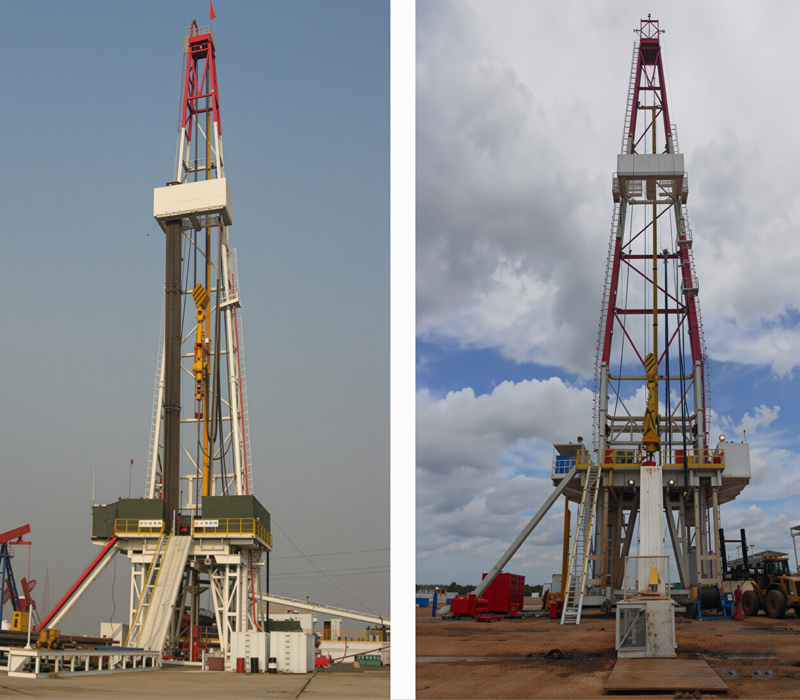 Operating requirement
A drilling equipment scope needs more than a horsepower number. Depth, drill pipe size, hook load, mud circulation, mast dimensions, foundation conditions and well-site movement all affect the final configuration.
Match the rig package against the rated depth, drill pipe size, hook load and mast height in the specification table, because the same engine class can differ across those columns.
Ask the supplier to confirm the rig package boundary: which auxiliaries, mud circulation items, power and control systems sit inside the quoted scope before treating the model as final.
Send the operating task, target depth, drill pipe size, hook load requirement, quantity, destination and required standards so the response can be priced against the project.
The published nominal drilling depth is the first sorting criterion, because it already bundles the mast, the hook load and the circulating system into a coherent class. The skid-mounted drilling rig range in the ZYT line steps up from a 1000HP class to a 2500HP class, and the two depth columns (114mm and 127mm drill pipe) show how the same rig is re-rated when the drill string gets heavier:
| Parameter | ZJ40D (1000HP) | ZJ50D (1500HP) | ZJ70DB (2000HP) | ZJ80 (2500HP) |
| Nominal drilling depth (114mm DP) | 2500-4000 m | 3500-5000 m | 4500-7000 m | 6000-9000 m |
| Nominal drilling depth (127mm DP) | 2000-3200 m | 2800-4500 m | 4000-6000 m | 5000-8000 m |
| Max. hook load | 2250 kN | 3150 kN | 4500 kN | 6750 kN |
| Traveling system | 5×6 | 6×7 | 6×7 | 7×8 |
| Mast (type / height) | K type / 43 m | K type / 45 m | K type / 45.5 m | K type / 48 m |
| Rotary table opening | φ700 mm (27.5") | φ952.5 mm (37.5") | φ952.5 mm (37.5") | Φ1257.3 mm (49.5") |
| Substructure height | 7.5 m | 9 m | 10.5 m | 10.5-12 m |
| Drawworks power | 735 kW (1000HP) | 1100 kW (1500HP) | 1470 kW (2000HP) | 2210 kW (3000HP) |
| Mud pump (qty × power) | 2 × 1300HP | 2 × 1300HP | 2 × 1600HP | 3 × 1600HP |
| Diesel generation (qty × power) | 3 × 1000 kW | 3 × 1080 kW | 3 × 1200 kW | 5 × 1200 kW |
| Solid-control mud tank capacity | ≥180 m³ | ≥320 m³ | ≥360 m³ | ≥600 m³ |
| Drive type | AC-VFD-AC, stepless speed regulation | |||
For a project rated around 4000 m with 114mm pipe, a 1000HP class rig already covers the depth, but the decision between 1000HP and 1500HP is usually made on hook load reserve, casing size and the mud tank volume needed for the drilling fluid programme, not on the depth column alone.
Hook load determines what the mast and the traveling system can lift, and the two numbers must be read as one set. In the skid range the traveling system grows from 5×6 on the 1000HP rig to 7×8 on the 2500HP rig while the hook load rises from 2250 kN to 6750 kN. When a tender specifies a maximum casing string or a landing load, compare it against the rated hook load and ask the supplier to confirm the static load capacity of the mast, which is published separately from the traveling rating.
All four skid classes use AC-VFD-AC transmission with stepless speed regulation, which gives the driller precise torque control on the drawworks and the rotary table instead of mechanical gear steps. The practical difference between the classes shows in the support system: mud pump capacity rises from 2×1300HP to 3×1600HP, and the solid-control mud tank grows from about 180 m³ to 600 m³. For deep wells with high circulating volume, confirm the mud tank capacity and the high-pressure manifold rating together with the pump package, because they limit the circulating rate as much as the pumps do.
When the programme moves the rig between pads or leases, the truck-mounted mobile rigs cover the 3000-4000 m band with their own transport built in. The two published models differ mainly in power and mast height:
| Parameter | 3000m Mobile Rig | 4000m Mobile Rig |
| Drilling depth (4½" DP) | 3000 m | 4000 m |
| Max. load | 1800 kN | 2250 kN |
| Max. fast rope pull | 280 kN | 280 kN |
| Rope dia / effective qty | Φ32 (1¼") / 10 | Φ32 (1¼") / 10 |
| Max. hoisting speed | 1.4 m/s | 1.4 m/s |
| Travelling system | 5×6 | 5×6 |
| Engine | CAT C15 / 540 bhp × 2 | CAT C18 / 630 bhp × 2 |
| Transmission | Allison M5620AR × 2 | Allison M6620AR × 2 |
| Mast clear height | 38 m | 39 m / 38 m |
The 4000m model keeps the same rope and traveling layout but steps the engine and the mast up, which is what carries the extra 450 kN of rated load. Confirm the moving dimensions and the axle configuration against the roads on the route before committing the model to a lease.
For skid rigs and heavy truck-mounted rigs that must relocate, ZYT supplies a land rig moving system rather than leaving the move to crane and trailer work. The integrated system is rated for 300-480 t of total rig weight with a moving capacity of 400-540 t, a ground clearance of about 600 mm and a road speed of up to 8 km/h, designed for road widths around 12 m and an ambient range of -17 to +55 °C. Mast moving equipment and substructure moving equipment are offered separately, so the scope can be limited to the parts of the rig that actually travel.
Send the target depth, the drill pipe size, the expected casing programme, the mud circulating rate, the site foundation or relocation requirement and the transport constraints. The supplier then matches the rig class, the power and mud package and the moving scope to the project, and confirms the documentation and commissioning support in the quotation. This sequence keeps the technical review on published parameters instead of on the horsepower number alone.
The drilling envelope is not complete without the mast, the substructure and the rotary table, because they set what can pass through the wellhead and how the BOP stack is handled. In the skid range the rotary table opening grows from φ700 mm (27.5") on the 1000HP rig to Φ1257.3 mm (49.5") on the 2500HP rig, which tracks the surface casing sizes the class is expected to run. The substructure height steps from 7.5 m to 10.5-12 m, and this dimension decides the clearance for the BOP stack, the wellhead equipment and the rig floor operations at the well. For the mobile rigs the mast clear height of 38 m (3000m model) or 39 m/38 m (4000m model) fixes the stand length the rig can handle. When the tender names a casing programme and a BOP requirement, compare them against the rotary opening, the substructure height and the mast clearance before the rig class is fixed, and confirm the high-pressure manifold rating together with the mud pump package so the circulating and well-control sides of the package stay consistent.
The circulating system is sized by the mud tank capacity and the solid-control scope, which grow with the rig class: the published effective capacity runs from at least 180 m³ on the 1000HP rig to at least 600 m³ on the 2500HP rig. For a deep well with high circulating volume, the tank capacity, the mud pump package and the high-pressure manifold rating must be reviewed as one system, because a small tank or a low manifold rating will cap the circulating rate no matter how much pump power is installed. Include the mud programme and the expected circulating rate in the inquiry so the supplier can confirm the tank and manifold scope rather than quoting the rig package alone.
A drilling rig supplier review should separate the rig package, mud circulation, power equipment, control system and transport needs. For long-cycle work, foundation and assembly conditions may matter as much as rated depth.
Compare the skid and mobile rig pages on rated depth, hook load and drive type, then send the operating requirement for configuration confirmation and quotation planning.
Browse productsUse these questions to check the depth, hook load and drive assumptions before sending the final requirement.
Confirm nominal drilling depth, drill pipe size, hook load, mast and substructure requirements, mud pump and power scope, foundation or mobility conditions and the expected operating cycle.
A mobile rig prioritizes relocation and integrated transport, while a skid-mounted rig is generally considered for a prepared site and longer fixed operation. Site access, foundation and project duration should guide the decision.
Consider the 2000HP ZJ70DB class when the plan reaches about 4500-7000 m on 114mm drill pipe, and the 2500HP ZJ80 class when the target is 6000-9000 m with hook loads up to 6750 kN and a mud pump package up to 3×1600HP. The final choice should also account for the mud tank volume and the substructure height required by the circulating and well-control plan.
AC-VFD-AC means the drawworks, the rotary table and the pumps are driven through variable-frequency AC motors with stepless speed regulation. It gives the driller precise torque and speed control, smoother tripping and reduced mechanical wear compared with mechanical gear shifting.
The land rig moving system is supplied as a matched option for rigs up to about 300-480 t, with a moving capacity of 400-540 t and a road speed up to 8 km/h. Mast moving equipment and substructure moving equipment can be scoped separately, so the quotation can be limited to the parts of the rig that actually travel.