
 Buyer review
Two different budgets, two different risk profiles.
New and used workover rigs are not two versions of the same product; they are two different purchases. A new rig buys a documented load rating, a full certification scope, predictable maintenance and the manufacturer behind it. A used rig buys a lower entry price and a history that has to be investigated: fatigue on the mast, wear in the drawworks, the state of the chassis, and the question of whether the original certificates still travel with the machine. Both choices are legitimate in the right operating case; the mistake is comparing only the purchase price.
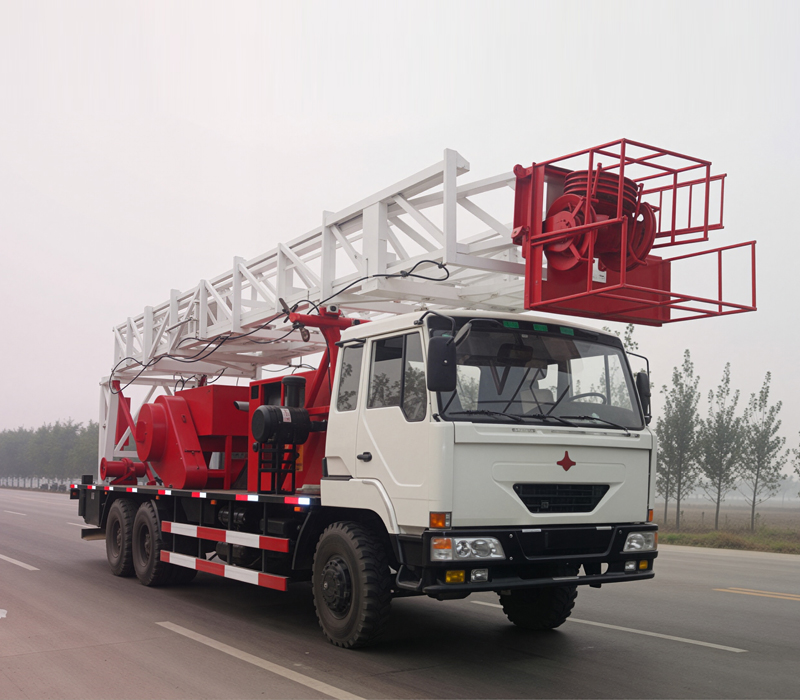
The comparison uses the ZYT truck-mounted workover range as the reference for new equipment — published depth, hook load and chassis figures — and the general points apply to any used rig offered in the market.
Step 1: Run the cost over the operating years, not the purchase year.
Build a five-year cost line for both options. The new rig carries the purchase price, standard spares, scheduled maintenance and the commissioning cost, all predictable from the quotation. The used rig carries the purchase price, plus the inspection, repair, replacement of worn components, certification or testing for the destination market, higher unscheduled downtime, and the cost of spares for an older model that may be harder to source. When the used price is written next to the first repair and the first extended downtime, the gap narrows faster than most buyers expect. A useful test: add 30-40% of the used purchase price for the first-year repair and certification work, and see whether the decision still favors the used unit.
Step 2: Match the duty to the remaining life.
A used rig is a fair choice when the duty is temporary, intermittent or low-cycle — a short field campaign, a backup unit, or a market where the well count is declining. For continuous multi-well workover with frequent trips, the fatigue and wear accumulate quickly, and the used unit's remaining life becomes the deciding number. Ask the seller for the machine hours, the trip count if available, and the operating history: a low-hour rig that spent years in storage is a different machine from a high-hour rig that has run continuously.
Step 3: Check the mast, drawworks and chassis before anything else.
Three areas carry most of the risk on a used workover rig. The mast and substructure: look for weld cracks, repaired welds, corrosion and the load history; a fatigue crack in a mast leg is not repairable on site. The drawworks: check the drum, the brake system and the gearbox for wear and for the service records. The chassis: confirm the axle condition, the road legality and the registration documents, because a rig that cannot travel legally is not a usable asset. Then review the hydraulic and electrical systems and the engine and transmission records. Use the inspection method from the factory inspection guide in this resources section as the basis, and add a qualified third-party inspection for the load-bearing structure.
Step 4: Ask what documentation travels with the machine.
A new rig ships with factory test reports, load records and the certificate scope of the build. A used rig travels with whatever the seller kept: original certificates, service records, or nothing. Confirm which documents are available before the purchase, because the destination market may require proof of the load rating, the certification basis or the machine history for import and operation. If the seller cannot produce the load test records, treat the ratings as unverified and price the re-testing and certification work into the deal.
Step 5: Compare the certification path.
Certification is where the two options differ most. A new rig is manufactured to the stated specification (for example API 4F for the structure and API 7K for power transmission on the larger ZYT models) with the certificate scope fixed at the build. A used rig is a previously built unit: the original certificates may exist, may name a different owner, or may not cover the re-importing market's requirements. Ask whether the machine can be tested and documented to meet the standard required by your tender, and who performs that work — the seller, a third party, or your own engineers. The certification cost and the time it takes belong in the purchase decision, not after it.
Step 6: Price the downtime and the spares separately.
Two hidden costs separate the options. Downtime: an older machine fails more often, and every day off the well in a multi-well programme has a direct cost. Spares: an older model may need parts that are no longer stocked or that come from a different supplier generation; a new unit from a current range has its spares list defined at the quotation. In the ZYT range, for example, the spare-parts list for the first operating period is part of the new-equipment scope, which removes the first-year spares uncertainty entirely.
The operating cases where each choice wins.
Choose the used rig when the budget is fixed and cannot be stretched, the duty is temporary or intermittent, the machine history is known and verifiable, and the local market can repair and support the older model. Choose the new rig when the programme is continuous and multi-well, the tender requires current certification and documentation, the spares and support chain matter over several years, and the machine will be the core of the fleet rather than a stopgap. For a fleet decision, mix the two: a new core unit for the continuous programme and a used backup for the peaks, with the inspection standard applied to the used unit before it enters service.