
 Buyer reference
API certification is a license, not a marketing term.
The API monogram is not a quality slogan. It is a licensed mark: the manufacturer holds a license from the American Petroleum Institute, pays for the program, and is subject to API surveillance of both the quality management system and the product. When a supplier says a product is "built to API standards" without the monogram, that is a design basis statement, not a licensed certification. For critical drilling and well-service equipment, buyers usually specify the monogram and verify the license number on the API website.
The relationship between API and ISO is the next point of confusion. ISO 9001 certifies the quality management system of the plant; it does not certify that a specific product meets a specific engineering standard. API product specifications certify the product design and manufacturing basis. A quotation should list both separately: the ISO system certificates for the plant, and the API product specifications for the equipment.
API 4F: rig structures — masts and substructures.
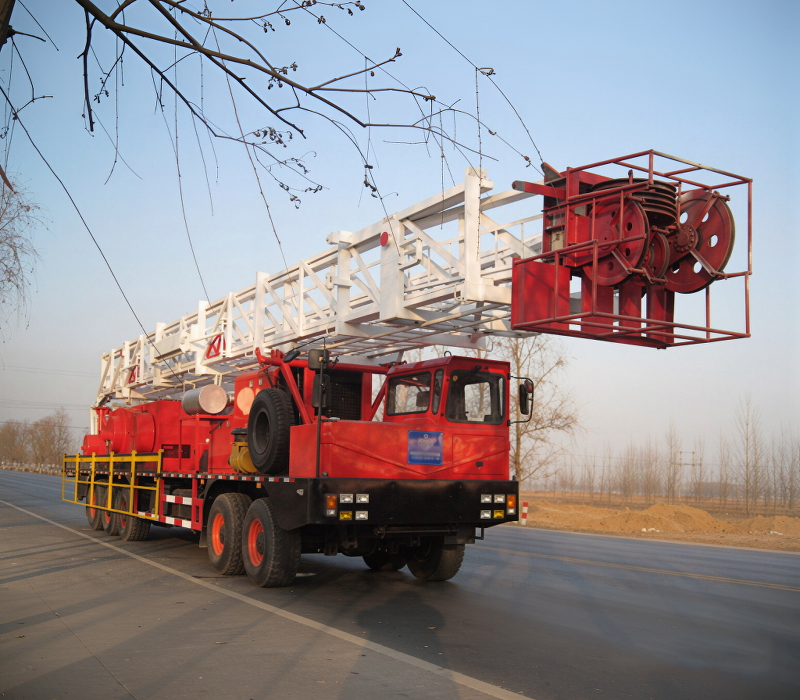
API 4F (Drilling and Well Servicing Structures) covers the design, manufacture and testing of masts, derricks and substructures used in drilling and well-servicing operations. For a buyer, the relevant points are the structural design basis, the rated load figures and the inspection requirements. In the ZYT truck-mounted workover range, the XJ250 and XJ350 units are manufactured to API 4F, which covers the mast and structure side of the package. When a quotation names API 4F, confirm that the load ratings on the certificate match the hook load and mast figures in the specification you are buying.
API 7K: power transmission components.
API 7K (Drilling and Well Servicing Equipment) covers the power transmission components between the prime mover and the driven equipment — the drawworks input, the drives, the clutches and related power components. The larger ZYT workover rigs (XJ450 and above) are manufactured to both API 4F and API 7K, because the heavier units carry a power transmission train that falls under the 7K scope. When a tender names both specifications, the certificate set should include both, and the quotation should state which components fall under which specification.
API 8C: hoisting equipment.
API 8C (Drilling and Well Servicing Equipment) covers hoisting equipment such as traveling blocks, hooks, elevators and related lifting components that handle the drill string and casing. It is the specification buyers should look for when the package includes the traveling block and hook assembly rather than only the mast. The ZYT traveling hook series and the traveling systems on the skid drilling classes are the components a buyer would check against 8C requirements.
API Q1: the quality management program.
API Q1 (Specification for Quality Management System Requirements for Manufacturing Organizations) is the quality system under which licensed API products are manufactured. It is often confused with ISO 9001, but Q1 is written specifically for the oil and natural gas industry supply chain and includes product traceability and risk management requirements that a general ISO system does not. When a supplier holds API Q1 plus the relevant product specifications, the two together form the API monogram program.
ISO 9001 / 14001 / 45001: the plant-level system certificates.
ISO 9001 certifies quality management, ISO 14001 environmental management and ISO 45001 occupational health and safety. These are plant-level certificates and are common across all serious suppliers, including most international oilfield manufacturers. They support the E-E-A-T picture of a supplier but they do not replace product-level API specifications. Ask for the certificate scope to confirm that the plant manufacturing your equipment is the one covered by the certificate.
Verifying a certificate in practice.
When a quotation lists certifications, take four verification steps. First, request the certificate number and the license holder name for each item, not only the standard name. Second, check the API license on the API website directory for API monogram items. Third, confirm the certificate covers the plant that actually manufactures your equipment — group-level certificates from an unrelated plant are a common gap. Fourth, match the certified ratings to the exact configuration in the quotation; a certificate for a 2000HP rig does not cover a 1000HP rig. A supplier that answers these four points cleanly is easier to audit than one that lists standard names without numbers.
What to state in the inquiry.
State the API specifications you require (for example API 4F and API 7K), whether you need the licensed monogram or accept a built-to basis, and whether the certificate set must cover the exact models and configurations quoted. Add any ISO system certificates required for the tender. Confirmed requirements in the inquiry produce certificates in the quotation, and certificates in the quotation can be verified before the order.