Technical fit
Match the service unit to the well problem: flushing, paraffin removal, swabbing or fluid recovery each map to a different pressure, heating or lifting duty.
Connect the well condition with the equipment needed for flushing, paraffin removal, fluid recovery, stimulation, power and routine production support.
 Operating requirement
Production support equipment is most useful when the inquiry describes the well condition and the intervention task clearly. Flushing, paraffin removal, swabbing, coiled tubing and fluid recovery each place different demands on pressure, heating, lifting and mobility.
Match the service unit to the well problem: flushing, paraffin removal, swabbing or fluid recovery each map to a different pressure, heating or lifting duty.
Ask the supplier to confirm which tanks, pumps, heaters and controls are included in the package, because production support quotes differ on the auxiliary scope.
Describe the well condition, the intervention task, the required pressure or temperature, quantity and destination so the unit type follows the job rather than a model name.
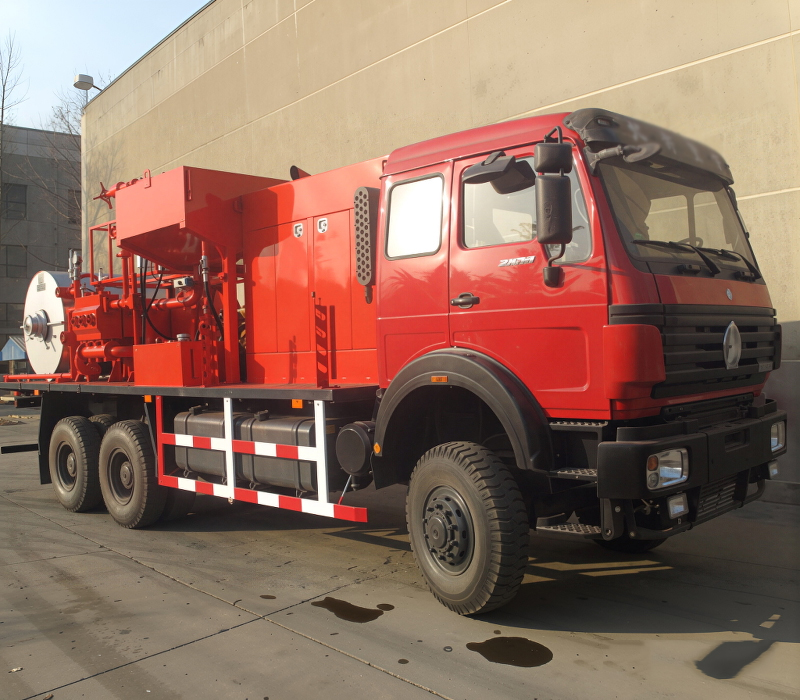
Production support equipment is selected around the problem at the well, and each unit publishes a duty that fits a specific task. Sand and debris in the wellbore point to a well flushing truck; paraffin buildup points to flushing or paraffin removal service; low wellhead pressure and fluid recovery point to swabbing; tubing intervention and plugging removal point to coiled tubing or wireline units. Start the inquiry with the observed problem so the unit type follows the task.
The well flushing truck is rated 40 MPa maximum working pressure at 30 m³/h displacement, with a booster pump inlet of 12-16 MPa, which covers conventional sand flushing, wellbore cleaning and pressure testing duty. Where heating is part of the job, the boiler truck delivers steam service at 6 MPa or 9.8 MPa working pressure up to 280 °C with a displacement of 1.26, 1.8 or 3.0 t/h and an integrated water tank of 3.5-8 m³, which supports paraffin removal and pipeline anti-freezing work in cold field conditions.
When the task is fluid recovery or downhole intervention, the lifting equipment is specified by depth and tension. The swabbing unit reaches a maximum working depth of 3350 m with a drum lifting capacity of 80-120 kN. The coiled tubing truck series covers three grades that step from 155 kN to 290 kN continuous tension and from 3600 m to 5900 m maximum laying-down depth, with tubing sizes from 1 inch up to 2 inch. The wireline unit complements the spread with a rated depth of about 6000 m on 2.4 mm wireline, a 10 kN maximum pull and a hoisting speed up to 6 m/s.
Water flooding and reservoir pressure maintenance use the water injection pump range, manufactured to API 610 and API 674, in two structural types: multistage centrifugal models (ZYT3GY series) for high-flow medium-pressure duty, and plunger models (ZYT3ZY series) for low-flow high-pressure duty, with outlet pressures from about 16 MPa to 68 MPa across the series. Site power is covered by the generator set range from 56 kW to 456 kW (SVL70 to SVL570), driven by VOLVO engines with Stamford alternators at 50 Hz, sized for continuous or emergency field power.
Reservoir evaluation and cement logistics close the loop: the logging truck is rated to 5000 m on 5.6 mm or 8 mm cable with a 30 kN or 50 kN hoisting pull and a 20 MPa hydraulic system; the bulk cement truck carries 14.1-20 m³ of special cement at 0.2 MPa rated pressure with 7.5-10 m³/min pneumatic unloading. Add these units to the inquiry when the programme includes logging runs or bulk cement logistics at the same pad.
Describe the well condition, the intervention objective, the fluid or deposit involved, the required pressure, heating or lifting duty, the well access and climate, the quantity and the destination. The supplier then matches the service unit or combination, and confirms the documentation and commissioning scope in the quotation.
The coiled tubing truck series is published in three grades, and the differences are worth reading before the intervention method is fixed:
| Parameter | ZLG 155/38 | ZLG 225/45 | ZLG 290/50 |
| Max. tube capacity | 3800 m (1-1/2" tubing) | 4500 m (1-1/2" tubing) | 6100 m (1-1/2" tubing) |
| Max. laying-down depth | 3600 m | 4200 m | 5900 m |
| Coiled tubing diameter | 1" - 1-1/2" | 1-1/4" - 1-3/4" | 1-1/2" - 2" |
| Max. continuous tension | 155 kN | 225 kN | 290 kN |
| Max. forced laying-down force | 75 kN | 115 kN | 145 kN |
| Max. lifting speed | 60 m/min | ||
The 155/38 grade suits shallow and medium intervention; the 225/45 adds tubing capacity and tension for deeper work; the 290/50 carries the largest reel and the highest laying-down depth for deep wells and heavier downhole tool strings. The unit is built to API RP 5C7 and integrates the injector head, the tubing reel, the BOP well-control stack and the operator cabin on one chassis, so the scope of well-control equipment is part of the package rather than a separate assembly.
Oilfield support equipment often works in desert, Gobi, mountain and high-altitude conditions. Confirm the operating temperature band and the site exposure in the inquiry so the supplier can match the anti-corrosion, sand-proof and low-temperature provisions: the boiler truck, for example, is specified for steam service up to 280 °C, while the mobile units carry the structural and sealing work needed for dusty and freezing field sites. Where winter operation is planned, ask for the low-temperature start provisions and the winterising scope in the quotation rather than assuming they are included.
Most production support jobs use more than one unit, and the combination should be quoted together. A routine paraffin and sand problem on a medium well, for example, is typically served by a well flushing truck for the clean-out pass and a boiler truck where heating is required, with a fluid supply truck backing the water supply if the job volume is large. A low-flow well that needs to be brought back into production points to a swabbing unit, possibly supported by a wireline unit for depth verification and tool runs. A water-flood block programme uses the injection pump range at the station, with generator sets sized for continuous site power and a bulk cement truck serving the cement logistics. In each combination, confirm the tank, manifold and control interfaces across the units, the spare-parts list and the commissioning scope in one quotation, so the spread is delivered and supported as one operating system rather than as independent machines.
Finally, keep the commercial scope in the same review: confirm the delivery terms, the documentation set and the commissioning support with the quotation, and ask for the spare-parts list for the first operating period of each unit in the spread. Production support equipment earns its value in continuous field service, so the availability of service parts, the winterising and anti-corrosion provisions and the operator training matter as much as the rated pressure, heating or lifting figures at the point of purchase.
Where several blocks share one service base, consolidating the flushing, heating, swabbing and injection units into a single fleet plan reduces both the capital outlay and the mobilisation cost between wells. Give the supplier the well count and the planned service window so the fleet, not just a single unit, can be sized against the workload.
The same comparison logic applies when the tender spans several well types: list the well condition and the service objective per well so the fleet proposal follows the actual workload rather than a generic list.
Production support selection should begin with the problem at the well: blockage, paraffin buildup, low flow, fluid recovery or routine maintenance. A clear service objective helps match flushing, heating, swabbing and coiled tubing equipment.
Open the flushing, boiler, swabbing and wireline product pages to compare duty ratings, then send the operating requirement for configuration confirmation.
Browse productsWork through these questions to define the well problem and the supporting scope before requesting a quotation.
The product range includes well flushing trucks, paraffin removal trucks, swabbing units, coiled tubing trucks, boiler trucks and water injection pumps. The suitable combination depends on the well condition and task.
Describe the well problem, fluid or deposit involved, required pressure or heating, expected flow or lifting task, well access, operating climate, quantity and whether the equipment must move between wells.
The well flushing truck is rated 40 MPa maximum working pressure at 30 m³/h displacement, with a booster pump inlet pressure of 12-16 MPa and outlet displacement up to about 35 m³/h, covering sand flushing, wellbore cleaning and pressure testing duty.
Multistage centrifugal models (ZYT3GY series) suit high-flow medium-pressure injection, and plunger models (ZYT3ZY series) suit low-flow high-pressure duty. Outlet pressures across the range run from about 16 MPa to 68 MPa, and both are manufactured to API 610 and API 674 standards.
The generator set range runs from 56 kW (SVL70) to 456 kW (SVL570) at 50 Hz with VOLVO engines and Stamford alternators, covering continuous and emergency field power and parallel connection for larger loads.